Bullets or Cartridges in Your Luggage at Istanbul Airport: Law 6136
Bullets or cartridges found in your bag at Istanbul Airport? What Law No. 6136 Articles 12 and 13 say, and what follows: custody, statement and rights.
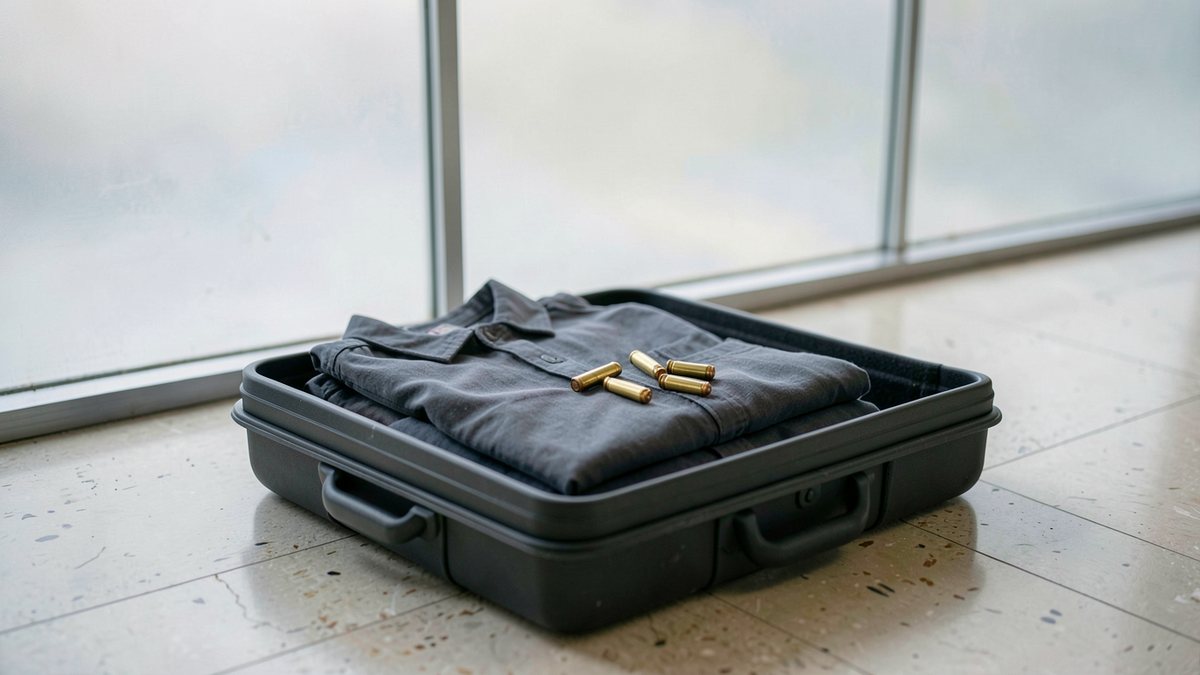
If bullets or cartridges are found in your luggage at Istanbul Airport, the Law on Firearms, Knives and Other Tools (Law No. 6136) frames the case. Article 13(1) punishes a person who buys, carries or possesses firearms or their ammunition contrary to the Law with imprisonment of two to four years and a judicial fine; Article 13(4) provides imprisonment of up to six months and a judicial fine where carrying or possessing a very small number of rounds is not assessed by the court as grave; and Article 12(1) punishes bringing ammunition into the country, or attempting to, with imprisonment of five to twelve years and a judicial fine. Which provision applies to a particular find is assessed by the prosecutor on the evidence and, if a case is opened, by the court.
A forgotten round in a jacket pocket or a box of cartridges left in a hunting bag can reach an X-ray belt without much thought. This guide reads Law No. 6136, the Turkish Penal Code (TCK), the Code of Criminal Procedure (CMK) and the Turkish Civil Aviation Law (Law No. 2920) as they stand on 25 October 2026, including the changes made by Law No. 7533 (in force since 30 November 2024) and the text of CMK Article 231 introduced by Law No. 7589 (in force since 31 July 2026). It is general information, not advice on a particular case.
1. Is It a Crime to Have Bullets or Cartridges in Your Luggage in Türkiye?
It can be. Under Article 1 of Law No. 6136, bringing firearms and their ammunition into the country, making, selling, buying, carrying or possessing them is subject to the Law. Under Article 13(1), buying, carrying or possessing ammunition for firearms contrary to the Law is an offence, and under Article 12(1) bringing it into the country is a separate, heavier offence. Article 13(4) deals with a very small number of rounds by setting a lower penalty, not by exempting them; whether an item is ammunition for a firearm within the Law is a factual question for the file.
Why screening finds it. Under Law No. 2920 Article 40, as supplemented in 2024, all passengers are checked and searched with their belongings by technical devices and, where needed, by hand when passing to the airport and the aircraft, limited to preventing breaches of aviation security; in the cases set out there, items whose carriage is prohibited can be taken into safekeeping, and the CMK rules on judicial search are reserved. Law No. 2920 Article 93(1)(g) lists carrying weapons and ammunition (silah, cephane) during flight among the prohibitions, and Article 93(2) allows the Ministry of Transport to grant special or general permission as an exception.
A lawful route for some travellers. Law No. 6136 Additional Article 4 allows foreigners who come to Türkiye to hunt as tourists with a permit under the Land Hunting Law, or to take part in shooting competitions organised by the Ministry of Youth and Sports, to bring in rifled and smoothbore guns, target rifles and pistols and their ammunition, in the quantity set by regulation, temporarily, on condition that they declare them to customs and obtain permission from the police at the entry gate. The guns, parts and ammunition admitted are recorded in the person's passport, and that record takes the place of a carrying permit; the guns, their parts and unused ammunition must be taken out of the country with the passenger on departure. Separately, Article 2 prohibits bringing firearms and their ammunition into the country, with the exceptions it lists (certain diplomats and consular staff, weapons and ammunition given as gifts to persons on official duty abroad, and certain envoys, consuls, officers and security officers serving abroad); the purchases from abroad listed in its first paragraph are reserved.
2. What Do Articles 12 and 13 of Law No. 6136 Say About Ammunition?
Article 13 covers buying, carrying and possessing; Article 12 covers bringing into the country, manufacture and trafficking. The 2024 amendments (Law No. 7533) raised the prison and fine ranges in the first, third and fourth paragraphs of Law No. 6136 Article 13; in Law No. 6136 Article 12 they widened the wording to cover the main or ballistically significant parts and added a paragraph on converted blank-firing guns, but did not change the prison and fine ranges of Article 12(1).
Article 13(1): carrying or possessing contrary to the Law. A person who, contrary to the Law, buys, carries or possesses firearms, their ammunition or their main or ballistically significant parts is sentenced to imprisonment of two to four years and a judicial fine of one hundred to five hundred days.
Article 13(2): grave number or nature. Where the firearm is one of those listed in Article 12(4), or the weapon, the ammunition or the parts are grave in number or nature (sayı veya nitelik bakımından vahim), the sentence is imprisonment of five to eight years and a judicial fine of five hundred to five thousand days. Article 13(3) sets a separate penalty for one firearm and its customary rounds kept at home or at the workplace.
Article 13(4): very few rounds. Where the possession or carrying of a very small number of rounds for firearms (pek az sayıda) is not assessed by the court as grave, the penalty is imprisonment of up to six months and a judicial fine of thirty to five hundred days. The Law does not say how many rounds count as "very few"; the wording leaves that assessment to the court.
Article 12(1): bringing ammunition into the country. A person who brings firearms within the Law, their ammunition or their main or ballistically significant parts into the country or attempts to do so (ülkeye sokar veya sokmaya kalkışır), or acts as an intermediary in this, is punished with imprisonment of five to twelve years and a judicial fine of five hundred to five thousand days.
Heavier cases. Article 12(2) and (3) set higher penalties where two or more people act together or within a criminal organisation, and under Article 12(4), where ammunition of any kind is grave in quantity, the penalties are increased by half. Under Additional Article 5, where the acts in Articles 12 and 13 concern military weapons of war such as cannons, mortars or machine guns, or their ammunition, the penalties are doubled.
Shotgun and sport cartridges. Article 4 contains a paragraph stating that the use (kullanılması) of smoothbore guns (yivsiz tüfekler) and their ammunition, and of rifled non-firearms used solely in sport and their ammunition, is not subject to the Law. That paragraph speaks of use. Whether a particular cartridge falls within it, and what follows for an item found in a bag at a border, is assessed by the prosecutor and the court; this guide does not draw that conclusion for any case.

3. Articles 13(4), 13(1) and 12(1) Side by Side
The table compares the texts of three provisions; it does not say which one applies to a given find.
| Point | Law 6136 Article 13(4) | Law 6136 Article 13(1) | Law 6136 Article 12(1) |
|---|---|---|---|
| Acts named | Possessing or carrying a very small number of rounds, not assessed by the court as grave | Buying, carrying or possessing firearms or their ammunition contrary to the Law | Bringing firearms or their ammunition into the country, or attempting to; acting as an intermediary (the paragraph also names manufacture outside Law No. 5201 and transporting, sending or selling items so brought in or made) |
| Prison term | Up to six months | Two to four years | Five to twelve years |
| Judicial fine | 30 to 500 days | 100 to 500 days | 500 to 5,000 days |
| Heavier case | Not in the paragraph | Article 13(2): five to eight years if grave in number or nature | Article 12(4): increased by half if grave in quantity |
| Prepayment, TCK Article 75(1) (upper limit of six months) | Upper limit is six months | Upper limit above six months | Upper limit above six months |
| Deferral of prosecution, CMK Article 171(2) (upper limit of three years; prepayment offences excluded) | Excluded if within prepayment | Upper limit above three years | Upper limit above three years |
| Summary procedure, CMK Article 250(1)(b) | Not on the list | Not on the list | Not on the list |
| Simplified trial, CMK Article 251(1) (upper limit of two years) | Upper limit within two years | Upper limit above two years | Upper limit above two years |
4. What Happens at the Airport After Ammunition Is Found?
Once ammunition is found, the matter can move from aviation security to the criminal procedure in the CMK. The steps below are those the CMK describes; this guide does not estimate how long any of them takes.
Apprehension and custody. Under CMK Article 90(4), the police inform the person apprehended of their legal rights immediately, and under Article 90(5) the prosecutor is informed at once and gives instructions. Under Article 91(1), if the prosecutor does not release the person, custody can be ordered; it cannot exceed twenty-four hours from apprehension, excluding the time needed to bring the person to the nearest judge, which cannot exceed twelve hours. Under Article 91(2), custody depends on its being necessary for the investigation and on concrete evidence indicating that the person committed an offence. Under Article 91(3), for collectively committed offences, because of difficulty in collecting evidence or the number of suspects, the prosecutor can extend it in writing by up to one day at a time, for up to three days, and the extension order is notified to the person at once. Under Article 91(5), the person, their lawyer, legal representative, spouse or a first- or second-degree blood relative can apply to the criminal judge of peace against the prosecutor's written order.
Consulate and family. Under CMK Article 95(2), if the person apprehended or held is a foreign national, their consulate is informed unless they object in writing, and under Article 147(1)(d) a relative of their choice is informed of the apprehension immediately.
Technical examination. Under CMK Article 63(1) and (3), where a question requires special or technical knowledge, the opinion of a technical specialist (bilirkişi) can be obtained, on the authority's own motion or at the request of the suspect or their lawyer, and during the investigation the prosecutor can use this power; an expert is not appointed for matters that can be resolved by general knowledge or experience. Whether an item is ammunition for a firearm can raise such a question; whether an expert is needed is for the prosecutor or the court.
5. What Are Your Rights Before You Give a Statement?
You must answer questions about your identity truthfully, and you have the legal right not to make a statement about the accusation. Under CMK Article 147(1), before a statement is taken the accusation is explained, the person is told that they can choose a lawyer who can be present, and they are told of that right to remain silent; they are reminded that they can ask for concrete evidence to be collected to clear themselves of suspicion.
The lawyer. Under CMK Article 149(3), the lawyer's right to meet the suspect, to be present during the statement and to give legal assistance cannot be prevented or restricted, and under Article 154(1) the suspect can meet their lawyer at any time, without a power of attorney, where others cannot hear; Article 154(2) allows a judge to restrict this for twenty-four hours only for the offences it lists, and the offences in Law No. 6136 are not among them. Under CMK Article 150(1), a suspect who says they are unable to choose a lawyer has one appointed on request, by the bar association (Article 147(1)(c)); Article 150(3) makes the appointment automatic in investigations for offences whose lower limit is more than five years' imprisonment.
Interpreter and record. Under CMK Article 202(1) and (3), a suspect who does not know Turkish well enough to explain themselves is given an interpreter appointed by the judge or the prosecutor. Under Article 147(1)(i), the statement record is read and signed by the person and the lawyer present, and if the person refuses to sign, the reasons are written down.
6. Can the Case End Without a Trial or a Sentence Taking Effect?
Several routes exist, and each has conditions in its own text. Whether one is open in a particular file is assessed by the prosecutor or the court.
Prepayment (önödeme), TCK Article 75. Under Article 75(1), for offences outside the scope of reconciliation that carry only a judicial fine or whose statutory upper limit of imprisonment does not exceed six months, no public prosecution is filed if the person pays the amount calculated under that paragraph, with investigation costs, within ten days of the prosecutor's notification (in three monthly instalments on request). Under Article 75(3), this also applies where a case is opened without the procedure or where the act's characterisation changes into such an offence. Law No. 6136 Article 13(4) sets an upper limit of six months; whether the act in a file is assessed under that paragraph is for the prosecutor and the court.
Deferral of the prosecution, CMK Article 171(2). The prosecutor can defer filing a public prosecution for five years for offences whose upper limit is three years or less, excluding offences within the scope of reconciliation and prepayment, if the four conditions in Article 171(3) are met together; under Article 171(6), the article does not apply to, among others, offences committed within the activity of a criminal organisation.
Summary and simplified procedures, CMK Articles 250 and 251. Since Law No. 7533 (2024), the list in Article 250(1)(b) names the third paragraph of Article 13 of Law No. 6136 (home or workplace) and Article 15(1) to (3); Articles 12 and 13(1), (2) and (4) are not on it, and under Article 250(13) the procedure is not applied where the suspect is not at the address declared in the file or is abroad. Under Article 251(1), after accepting the indictment, the criminal court of first instance (asliye ceza mahkemesi) can apply the simplified procedure for offences with a judicial fine and/or an upper limit of two years or less, unless a hearing date has been set; under Article 251(3), a conviction's resulting sentence is reduced by one quarter.
Deferral of the announcement of the verdict (HAGB), CMK Article 231. Under Article 231(5), as rewritten by Law No. 7589 (in force since its publication on 31 July 2026; the transitional provisions of Law No. 7589 contain no separate rule for this article), where the sentence imposed is imprisonment of two years or less or a judicial fine, the court can defer the announcement of the verdict; apart from the provisions on confiscation, the deferred verdict produces no legal consequence for the defendant. Article 231(6) requires no previous conviction for an intentional offence, the court's view that the defendant will not offend again, and full remedy of any damage; under Article 231(9), the remedy can also be made in monthly instalments during the supervision period. Under Article 231(8), a five-year supervision period follows, and under Article 231(10), if no new intentional offence is committed and the supervision obligations are met, the deferred verdict is removed and the case is dropped. Under Article 231(12), subject to CMK Article 272(3), an appeal (istinaf) lies against the decision.
Reconciliation, CMK Article 253. Under Article 253(2), for offences in laws other than the Penal Code that are not prosecuted on complaint, reconciliation requires an express provision in that law. Law No. 6136 contains none, and its offences are not prosecuted on complaint.
7. What Happens to the Ammunition?
Under TCK Article 54(4), items whose possession, carrying, purchase or sale constitutes an offence are confiscated (müsadere edilir). Under Law No. 6136 Article 10, ammunition whose confiscation is ordered by a court, or which is seized by the security forces in any way, is placed at the disposal of the Ministry of National Defence against a record. Under TCK Article 75(5) and CMK Article 231(5), neither prepayment nor deferral of the announcement of the verdict affects confiscation.
8. Step by Step If Ammunition Is Found in Your Bag
- Do not handle the item further, and answer questions about your identity truthfully (CMK Article 147(1)(a)).
- Say that you want a lawyer and, if you need one, an interpreter (CMK Articles 147, 150 and 202).
- If you are a foreign national, decide whether your consulate should be informed; it is informed unless you object in writing (CMK Article 95(2)).
- You have the legal right not to make a statement about the accusation, and you can meet your lawyer before any statement (CMK Articles 147(1)(e) and 154(1)).
- If you came to hunt or compete under Additional Article 4 of Law No. 6136, keep the customs declaration, the entry-gate permission and the passport record together.
- Ask for the seizure record, and read any statement record before signing it.
Frequently asked questions
Is one bullet in my luggage a crime in Türkiye?
It can be. Law No. 6136 Article 13(1) covers carrying or possessing ammunition for firearms contrary to the Law, with imprisonment of two to four years and a judicial fine. Article 13(4) provides imprisonment of up to six months and a judicial fine where the possession or carrying of a very small number of rounds is not assessed by the court as grave. The Law gives no number of rounds; the assessment belongs to the court.
Is bringing ammunition into Türkiye treated differently from carrying it?
The texts differ. Article 12(1) of Law No. 6136 names bringing firearms or their ammunition into the country, or attempting to, with imprisonment of five to twelve years and a judicial fine, while Article 13(1) names buying, carrying or possessing them contrary to the Law. Which provision fits a particular find is assessed by the prosecutor and, if a case is opened, by the court.
I am a hunter. Can I bring my hunting cartridges to Türkiye?
Additional Article 4 of Law No. 6136 allows foreigners coming to hunt as tourists with a permit under the Land Hunting Law, or to take part in shooting competitions organised by the Ministry of Youth and Sports, to bring in guns and their ammunition temporarily, on condition that they declare them to customs and obtain permission from the police at the entry gate. The guns, parts and ammunition admitted are recorded in the passport, and the guns, parts and unused ammunition must be taken out of the country on departure.
Can I be held at the airport, and for how long?
Under CMK Article 91(1), custody cannot exceed twenty-four hours from apprehension, excluding the time needed to bring the person to the nearest judge, which cannot exceed twelve hours. Under Article 91(3), for collectively committed offences, because of difficulty in collecting evidence or the number of suspects, the prosecutor can extend it in writing by up to one day at a time, for up to three days, and under Article 91(5) an application can be made to the criminal judge of peace against the prosecutor's written order.
Do I have to give a statement?
You must answer questions about your identity truthfully under CMK Article 147(1)(a). Under Article 147(1)(e), you are told that you have the legal right not to make a statement about the accusation. Under Article 149(3), the lawyer's right to be present during the statement cannot be prevented or restricted, and under Article 150(1) a lawyer is appointed on request if you say you cannot choose one.
Can the case be closed by paying a sum?
TCK Article 75(1) provides prepayment for offences outside the scope of reconciliation that carry only a judicial fine or whose statutory upper limit of imprisonment does not exceed six months: if the amount is paid within ten days of the prosecutor's notification, no public prosecution is filed. Law No. 6136 Article 13(4) sets an upper limit of six months, while Articles 13(1) and 12(1) set higher limits. Whether the act in a file is assessed under Article 13(4) is for the prosecutor and the court.
Will I get the ammunition back?
Under TCK Article 54(4), items whose possession or carrying constitutes an offence are confiscated. Under Law No. 6136 Article 10, ammunition whose confiscation is ordered by a court, or which is seized by the security forces, is placed at the disposal of the Ministry of National Defence against a record. Prepayment (TCK Article 75(5)) and deferral of the announcement of the verdict (CMK Article 231(5)) do not affect confiscation.



This page is general information about Turkish law and procedure — not legal advice, and reading it does not create an attorney–client relationship. Laws and practice change and every case turns on its own facts, so please do not rely on it for your situation; speak with a lawyer first.
Related guides
All guides →Caught With a Weapon or Restricted Item at Istanbul Airport
Stopped at Istanbul Airport with a firearm, ammunition, a knife, pepper spray or a replica? What it means, what happens next, and your right to silence and a lawyer.
9 min readCriminal Law & Airport ArrestsKnife in Luggage at Istanbul Airport: Law 6136 Weapons Charge
A knife found in your bag at Istanbul Airport can open a criminal file under Law No. 6136. Which knives the Law covers, Articles 14 and 15, and your rights.
18 min readAirport arrestArrested at Istanbul Airport on a Warrant: What Happens Next
Stopped or arrested at Istanbul Airport because of a warrant or alert? What the GBT check means, what happens next, and your right to silence and a lawyer.
5 min readRelated service: Weapon or prohibited item at the airport → · All airport legal services →
Speak with a lawyer
One message is all it takes. We answer 24 hours a day, every day of the year — for IST and Sabiha Gökçen.
Prefer to write? Send a written request — the form opens on Lexin Legal's website.