Too Many Cigarettes at Istanbul Airport Customs: Law 5607
Stopped at Istanbul Airport customs with more cigarettes or alcohol than allowed? How Laws 4458 and 5607 separate a customs duty matter from a smuggling case.
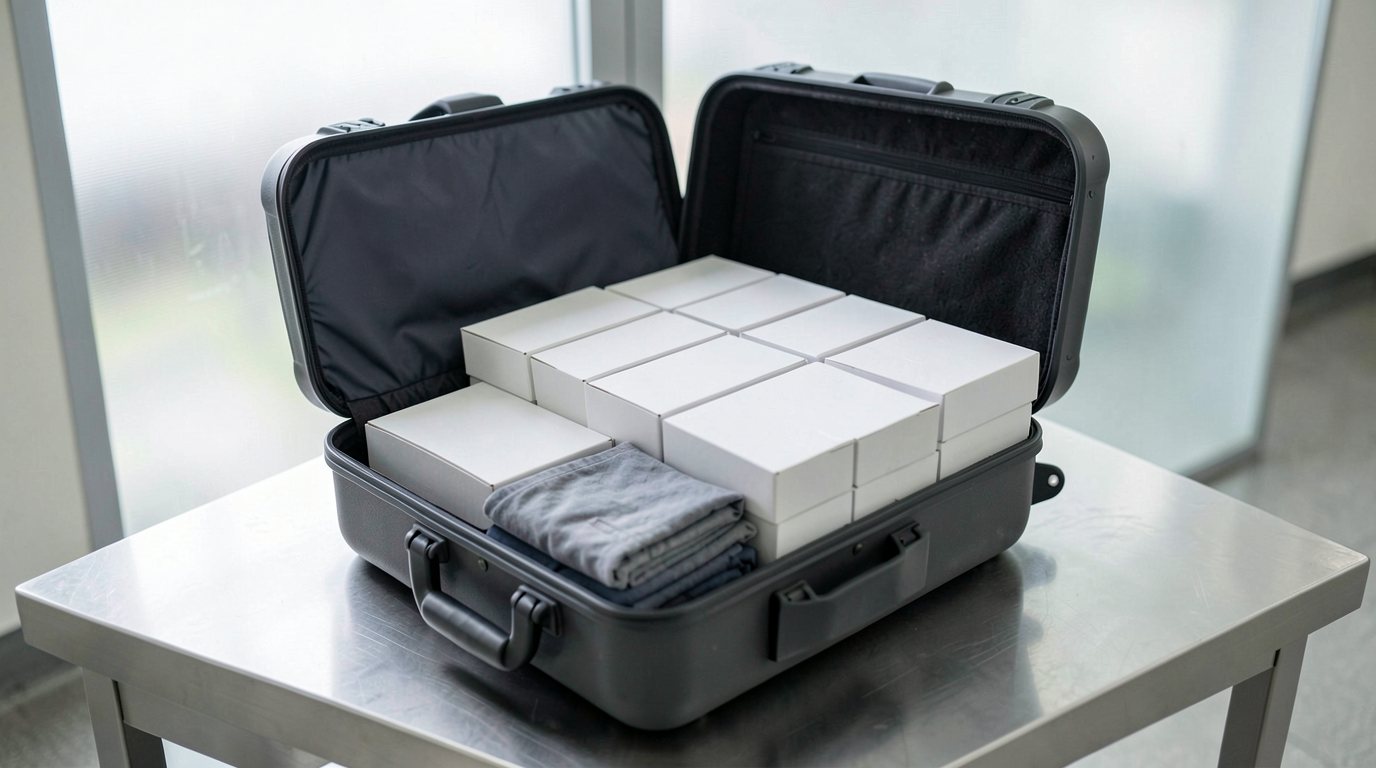
A traveller lands at Istanbul Airport with several cartons of cigarettes and a few bottles of spirits, bought as gifts or at a lower price abroad. They walk towards the exit and are stopped. The suitcase is opened on an inspection table, the cartons are counted, and an officer begins writing a record. The questions come quickly: is this just a matter of paying something at customs, or is it smuggling? Will the cigarettes be returned? And should anything be signed before speaking to a lawyer?
This guide reads the text of the provisions that answer those questions: the Law on Combating Smuggling (Law No. 5607, Kaçakçılıkla Mücadele Kanunu), the Customs Law (Law No. 4458, Gümrük Kanunu) and the Code of Criminal Procedure (CMK, Law No. 5271). It is general information, not advice on a particular case. What happens in a real file depends on its facts and on the assessment of the customs administration, the prosecutor and, if a case is opened, the court.
Two points before starting. First, this guide does not state how many cigarettes, cartons or litres a traveller may bring without paying: the allowance is set outside these two Laws and can change, so check the allowance in force on your travel date. Second, smoking or vaping inside the terminal is a different subject, covered in our guide to smoking or vaping at Istanbul Airport under Law 4207. For the declaration channels themselves, see Turkey customs: what to declare.
1. Two Laws, Two Tracks
When a passenger's goods turn out to be more than they declared, two Laws can come into play, and their texts point in different directions.
The customs track: Law No. 4458 Article 235(3). For goods of passengers that are outside the scope of personal and gift items under customs legislation and are found contrary to their declaration on them, among their belongings or in their vehicles, or that belong to someone else but are shown as their own, the customs duties are collected twice over and the goods are handed to their owner (gümrük vergileri iki kat olarak alınır ve eşya sahibine teslim edilir). If the customs duties are not paid, the goods are deemed abandoned to customs (gümrüğe terk edilmiş sayılır).
The criminal track: Law No. 5607 Article 6(4). Article 6 is headed "Smuggled goods brought by passengers" (Yolcu beraberinde getirilen kaçak eşya). Its first three paragraphs were repealed in 2013 by Law No. 6455; the fourth remains. It provides that where goods found on passengers, among their belongings or in their vehicles contrary to their declaration are of a commercial nature (ticarî mahiyette), or their import or export is prohibited, the provisions of Article 3 apply. Article 3 is the Article that defines the smuggling offences.
Article 6(4) turns on two points: whether the goods are of a commercial nature, and whether their import or export is prohibited. Article 235(3) is worded differently: it refers to goods outside the scope of personal and gift items under customs legislation. Neither Article gives a number of cartons or bottles at which goods become commercial. Whether the goods in a given suitcase are of a commercial nature is a question the customs administration, the prosecutor and, if a case is opened, the court assess on the facts. This guide does not say how that question would be answered in any file.
The table sets out the two tracks in the words of the texts.
| Point | Law No. 4458 Article 235(3) | Law No. 5607 Article 6(4) with Article 3 |
|---|---|---|
| Goods in the text | Goods of passengers outside the scope of personal and gift items, found contrary to their declaration | Goods found on passengers contrary to their declaration that are of a commercial nature, or whose import or export is prohibited |
| What the text provides | Customs duties collected twice over; the goods handed to their owner | The provisions of Article 3 (smuggling offences) apply |
| If not paid / not returned | Goods deemed abandoned to customs if the duties are not paid | Goods that may be subject to confiscation cannot be returned to their owner (Article 16(1)) |
| Who decides | The customs administration; objection under Article 242 | The prosecutor and the criminal court |
| Tobacco and alcohol | No separate rule in the paragraph | Article 3(10): penalties increased by half to double, not less than three years |
2. What Article 3 of Law No. 5607 Says About Tobacco and Alcohol
Article 3 of Law No. 5607 has been headed "Smuggling offences" (Kaçakçılık suçları) since 2013; before that, its heading was "Offences and misdemeanours". The paragraphs that matter for a traveller are these.
- Bringing goods in without customs procedures. Under Law No. 5607 Article 3(1), a person who brings goods into the country without subjecting them to customs procedures (gümrük işlemlerine tabi tutmaksızın) is punished with imprisonment of one to five years and a judicial fine of up to ten thousand days. If the goods are brought in outside the customs gates, the penalty is increased by one third to one half.
- Tobacco and alcohol. Under Article 3(10), where the goods that form the subject of the smuggling offence are fuel, tobacco, tobacco products, cigarette tubes (makaron), rolling paper, ethyl alcohol, methanol or alcoholic drinks, the penalties under the preceding paragraphs are increased by half to double, and the penalty applied under that paragraph cannot be less than three years.
- Products without a stamp or similar mark. Article 3(18) concerns tobacco products and alcoholic drinks whose packaging carries no stamp, label, hologram or similar mark (bandrol), or carries an imitation or misleading one. It punishes a person who produces, keeps or carries them for a commercial purpose (ticari amaçla), offers them for sale or sells them, or buys them knowing this feature and for a commercial purpose, with imprisonment of three to six years. Its last sentence adds that where it is understood that the products were smuggled into the country, the penalty is imposed under the tenth paragraph.
- Attempt. Under Article 3(22), the acts defined in the preceding paragraphs are punished as if completed even if they remained at the attempt stage.
- Value of the goods. Under Article 3(23), if the value of the goods is excessive (fahiş), the penalties are increased by half up to one fold; if the value is light (hafif), the penalties are reduced by up to half, and if very light (pek hafif), by up to one third.
Article 3 is the text that Article 6(4) points to. Whether its elements are met in a given case is for the prosecutor and the court. For passengers' goods outside the scope of personal and gift items that are found contrary to their declaration, Law No. 4458 Article 235(3) sets the customs consequence described in Section 1.
3. Search, Seizure, Destruction and Confiscation
Search. Under Law No. 5607 Article 9(1), searches and seizures carried out on containers, packages and means of transport, and on persons, where smuggled goods are suspected, are carried out under the Code of Criminal Procedure. Under Article 9(2), at customs halls and customs gates, the person, belongings, loads and vehicles of a person suspected of hiding smuggled goods may be searched by customs officers for the purpose of customs control, and smuggled goods found in the search are seized at once. Body and luggage searches at the airport are covered in more detail in our guide to drugs or suspected smuggling at Istanbul Airport.
The record. Under Law No. 5607 Article 11(1), goods seized on suspicion of smuggling are handed to the customs administration with a written record (tutanak) showing their distinguishing features, such as quantity, kind and brand. Read the record before signing it, and check that the count and the description match what was in the bag.
Destruction of unstamped products. Under Law No. 5607 Article 11(5), tobacco products, ethyl alcohol, methanol, alcoholic drinks, cigarette tubes and rolling paper seized under that Law whose packaging carries no stamp, label, hologram or similar mark applied by public bodies are destroyed by the administration that seized them, after a sample is taken or, where that is not possible, after their distinguishing details are recorded.
Confiscation. Under Law No. 5607 Article 13(1), the provisions of the Turkish Penal Code on confiscation of items and gains apply to the offences in that Law. Under Article 13(2), the fact that no penalty is imposed on the offender because of effective repentance, or that the public case is dropped, does not prevent the confiscation provisions from being applied to the goods that are the subject of the offence.
No return of goods subject to confiscation. Under Law No. 5607 Article 16(1), goods that may be subject to confiscation because they form the subject of an offence in that Law cannot be returned to their owner. A decision on their liquidation (tasfiye) is given within six months of seizure (one month where there is a risk of damage to the goods or of a substantial loss in their value, or keeping them is a serious burden), by the judge during the investigation or by the court during the prosecution; if no decision is given within those periods, the goods are liquidated at once.
4. Effective Repentance: Article 5 of Law No. 5607
Law No. 5607 has its own effective repentance (etkin pişmanlık) provision.
Paying twice the customs value. Under Law No. 5607 Article 5(2), a person who has committed one of the offences in Article 3, except its seventh paragraph (which concerns goods whose import is prohibited by law), and shows effective repentance by paying twice the customs value (gümrüklenmiş değerinin iki katı) of the goods to the Treasury, has the penalty for the smuggling offences in that Law:
- reduced by half, if the payment is made before the investigation stage ends; or
- reduced by one third, if the payment is made during the prosecution stage before judgment is given.
The same paragraph provides that the prosecutor reminds the suspect of this during the investigation, and that if no reminder is given in the investigation, the judge reminds the accused during the prosecution. This guide does not state what the customs value of any goods would be.
Exclusions. Under Article 5(3), the second paragraph does not apply to repeat offenders (mükerrirler) or where the offence is committed within the activity of an organisation.
Informing the authorities. Article 5(1) concerns a person who took part in an offence in Article 3 and, before the authorities learn of it, informs the competent authority of the act, the other offenders and where the smuggled goods are hidden: if the information leads to the capture of the offenders or the seizure of the goods, that person is not punished. A person who helps bring the act fully to light after the authorities have learned of it has the penalty reduced by two thirds.
Article 13(2), quoted above, means that effective repentance does not by itself prevent confiscation of the goods.
5. If the Matter Stays on the Customs Track
What is exempt. Law No. 4458 Article 167 lists goods released for free circulation that are exempt from customs duties. Its point 5(h) names personal items of passengers for their own use that are not of a commercial nature, and point 6(a) names gift items accompanying passengers up to a value limit written in the Article. The last paragraph of Article 167 authorises the President to define these goods and determine their kinds, types and quantities, and to reduce the exempt amounts to zero or raise them up to double. Law No. 4458 Article 40 allows the central customs authority (Müsteşarlık in the text) to make special arrangements for goods brought in by passengers. These are the reasons this guide does not quote an allowance: check the one in force on your travel date.
Double duties. Where Article 235(3) applies, the customs duties are collected twice over and the goods are handed to their owner. If the duties are not paid, the goods are deemed abandoned to customs.
Objection. Under Law No. 4458 Article 242(1), persons liable may object to customs duties, penalties and administrative decisions notified to them within fifteen days of notification, by a petition to the superior authority or, if there is none, to the same authority. Under Article 242(2), objections are decided within thirty days and the decision is notified. Under Article 242(3), a petition given to the wrong authority within the period is treated as made in time. Under Article 242(4), the administrative courts of the place where the act was done may be applied to against a decision rejecting the objection.
Customs settlement is not available where smuggling is involved. Law No. 4458 Article 244(1) allows an application for settlement (uzlaşma) with the customs administration for additional assessments and penalty decisions, within fifteen days of notification. Article 244(2) provides that this does not apply where the act relating to the customs duties and penalties is connected with the smuggling offences in Law No. 5607.
6. Your Rights If You Are Questioned
If the matter is treated as a possible smuggling offence, the traveller may be asked to give a statement (ifade) as a suspect. The Code of Criminal Procedure sets the rules.
- Right to a lawyer. Under CMK Article 147(1)(c), the suspect is told that they have the right to choose a lawyer (müdafi), to benefit from the lawyer's legal assistance, and that the lawyer may be present during the statement. If the suspect is not in a position to choose a lawyer and wishes to have one, the bar association appoints one.
- Right not to make a statement. Under CMK Article 147(1)(e), the suspect is told that they have the legal right not to make a statement about the accusation.
- The record. Under CMK Article 147(1)(i), the statement is put in a written record, which is read and signed by the person giving it and the lawyer present; if the person refuses to sign, the reasons are written down.
- The lawyer cannot be kept out. Under CMK Article 149(1) and (3), the suspect may have the help of one or more lawyers at every stage, and the lawyer's right to meet the suspect, to be present during the statement and to give legal assistance cannot be prevented or restricted.
- Statements to the police without a lawyer. Under CMK Article 148(4), a statement taken by the police without a lawyer present cannot be the basis of a judgment unless the suspect or accused confirms it before a judge or court.
If a case is opened, Law No. 5607 Article 17(2) provides that cases for offences under that Law are heard by the criminal courts of first instance (asliye ceza mahkemeleri) designated by the Council of Judges and Prosecutors, but where forgery of an official document is committed in connection with these offences, the competent court is the assize court (ağır ceza mahkemesi); and Article 18(1) provides that the court sends a copy of the indictment to the customs administration, which is accepted as an intervening party on its application.
7. Step by Step at the Airport
- Stay calm and do not argue about the count. Ask that the cartons and bottles be counted in front of you.
- Read every record before signing. Check the number, kind and brand of the goods in the seizure record. If something is wrong, say so and ask that it be written down.
- Ask which track the matter is on. A customs duty assessment under the Customs Law is different from a smuggling file under Law No. 5607.
- Do not give a statement as a suspect before speaking to a lawyer. You have the right to choose a lawyer and the right not to make a statement about the accusation (CMK Article 147(1)(c) and (e)).
- Ask for an interpreter if you do not understand Turkish. Under CMK Article 202(1) and (3), where a suspect does not know enough Turkish to explain themselves, the essential points are translated by an interpreter, who in the investigation stage is appointed by the judge or the prosecutor.
- Keep copies. Photograph or keep a copy of every document you are given, including any notification of duties or penalties.
- Note the date of any notification. The fifteen-day objection period in Law No. 4458 Article 242(1) runs from notification.
- Give an address and contact details that will work after you leave Türkiye.
If you or someone travelling with you has been stopped at Istanbul Airport or at Sabiha Gökçen over cigarettes or alcohol, a lawyer can explain these rules in your language and look at the records you were given. Guidance can start on WhatsApp. See also our pages on customs seizure and giving a statement (ifade), and our guide to goods seized at Istanbul Airport customs.
Frequently asked questions
How many cigarettes or bottles can I bring into Türkiye?
This guide does not state a number. Law No. 4458 Article 167 exempts personal items of passengers that are not of a commercial nature and gift items up to a value limit, and its last paragraph authorises the President to determine the kinds, types and quantities of exempt goods and to change the exempt amounts. The allowance can therefore change: check the allowance in force on your travel date before you fly.
Is having too many cigarettes at customs a crime?
Law No. 5607 Article 6(4) provides that where goods found on passengers contrary to their declaration are of a commercial nature, or their import or export is prohibited, the provisions of Article 3 (smuggling offences) apply. For goods outside the scope of personal and gift items that are found contrary to the declaration, Law No. 4458 Article 235(3) provides that the customs duties are collected twice over and the goods are handed to the owner. Neither Article gives a number at which goods become commercial; the authorities and, if a case is opened, the court assess the facts.
What penalty does the law set for smuggling tobacco or alcohol?
Under Law No. 5607 Article 3(1), bringing goods into the country without subjecting them to customs procedures is punished with imprisonment of one to five years and a judicial fine. Under Article 3(10), where the goods are tobacco, tobacco products or alcoholic drinks, among others, the penalties are increased by half to double and cannot be less than three years. Under Article 3(23), the penalties are increased by half up to one fold if the value of the goods is excessive, and are reduced by up to half if it is light, or by up to one third if very light.
Will I get my cigarettes or alcohol back?
On the customs track, Law No. 4458 Article 235(3) provides that the goods are handed to their owner once the doubled customs duties are paid, and that if they are not paid the goods are deemed abandoned to customs. On the criminal track, Law No. 5607 Article 16(1) provides that goods that may be subject to confiscation cannot be returned to their owner, and Article 11(5) provides that seized tobacco products and alcoholic drinks without a stamp or similar mark on their packaging are destroyed after a sample is taken or, where that is not possible, after their distinguishing details are recorded.
Can paying something reduce the penalty?
Under Law No. 5607 Article 5(2), a person who has committed an offence in Article 3, other than its seventh paragraph, and pays twice the customs value of the goods to the Treasury has the penalty reduced by half if paid before the investigation ends, or by one third if paid during the prosecution before judgment. The prosecutor, or in the prosecution the judge, reminds the person of this. Under Article 5(3), it does not apply to repeat offenders or offences within an organisation's activity, and under Article 13(2) effective repentance does not prevent confiscation of the goods.
Can I challenge a customs decision?
Under Law No. 4458 Article 242(1), customs duties, penalties and administrative decisions may be objected to within fifteen days of notification, by a petition to the superior authority or, if there is none, to the same authority. Under Article 242(2), the objection is decided within thirty days, and under Article 242(4), a decision rejecting it may be taken to the administrative courts of the place where the act was done. Under Article 244(2), customs settlement is not available where the act is connected with the smuggling offences in Law No. 5607.




This page is general information about Turkish law and procedure — not legal advice, and reading it does not create an attorney–client relationship. Laws and practice change and every case turns on its own facts, so please do not rely on it for your situation; speak with a lawyer first.
Related guides
All guides →Turkey Customs: What to Declare (Red vs Green Channel)
Turkey customs: which channel do you use at the airport, and what must you declare? A plain-English guide to the red vs green channel and declaration duty.
9 min readCustoms & CashCash Seized at Istanbul Airport Customs: Get It Back
Had cash seized at Istanbul Airport (IST) or Sabiha Gökçen customs? A plain-English guide to the declaration rules, the tutanak, and how to recover it.
7 min readCustomsGoods Seized at Istanbul Airport Customs: What to Do
Electronics, gifts, medication or goods held at Istanbul Airport customs? A plain-English guide to your rights, the process, and how to get your items back.
8 min readRelated service: Customs seizure — cash, goods & devices → · All airport legal services →
Speak with a lawyer
One message is all it takes. We answer 24 hours a day, every day of the year — for IST and Sabiha Gökçen.
Prefer to write? Send a written request — the form opens on Lexin Legal's website.