Threatening Staff or Police at Istanbul Airport: TCK 106
Threatened airline staff, security or police at Istanbul Airport? What TCK 106 says, when a complaint or conciliation applies, and your rights if held.

Yes, threatening airline staff, a security officer or a police officer at Istanbul Airport can lead to a criminal investigation. The basic offence is threat under TCK Article 106 of the Turkish Penal Code (Law No. 5237, the TCK): a threat of an attack on someone's life, body or sexual inviolability carries six months to two years, and the aggravated forms in TCK Article 106(2) carry two to seven years. Depending on what was said, to whom and why, TCK Article 125 (insult), TCK Article 213 (threat to create public panic) or TCK Article 265 (resisting a public official) can be involved instead or as well.
This guide reads those provisions, and the Code of Criminal Procedure (Law No. 5271, the CMK) rules for a traveller who is apprehended, as they stand on 8 November 2026. It is general information, not advice on a particular case, and does not say what penalty any person would receive.
1. What Does TCK Article 106 Say About Threats?
Article 106 punishes a person who threatens another with a future harm. It has three forms in its first paragraph and aggravated forms in its second.
Threat to life, body or sexual inviolability. Under TCK Article 106(1), a person who threatens another by saying they will carry out an attack on the life, bodily or sexual inviolability of that person or of a relative is punished with six months to two years' imprisonment. A sentence added in May 2022 provides that, where the offence is committed against a woman, the lower limit of the penalty cannot be less than nine months.
Threat to property or of "some other evil". The same paragraph continues: where the threat is that the person will suffer major damage to their property or that some other evil will be done to them ("sair bir kötülük"), the penalty is two to six months' imprisonment or a judicial fine, imposed on the victim's complaint.
Aggravated threat. Under TCK Article 106(2), the penalty is two to seven years where the threat is made:
- with a weapon;
- by the person making themselves unrecognisable, by an unsigned letter or by special signs;
- by more than one person together; or
- by using the intimidating power of an existing or presumed criminal organisation.
A footnote to the official text records that an amendment of 4 June 2025 (Law No. 7550) raised the upper limit in this paragraph from five years to seven years and added the two-month lower limit to the property and "other evil" sentence of paragraph (1). The earlier upper limit of five years is no longer in force.
Further offences. Under TCK Article 106(3), where intentional killing, intentional injury or damage to property is committed for the purpose of the threat, those offences are punished separately as well.
Is a heated sentence a threat? The Article speaks of an attack that will be carried out or an evil that will be done. Whether words said in an argument meet that definition depends on the words, the context and intent. Under TCK Article 21(1), an offence requires intent, meaning that the elements of its legal definition are carried out knowingly and willingly. The prosecutor and the court assess these points; this guide cannot.
2. Does a Threat Case Need a Complaint, and Can It Be Settled Through Conciliation?
It depends on the form. A complaint is required for the property or "other evil" threat; the threat to life, body or sexual inviolability in TCK Article 106(1) does not depend on a complaint, but it falls within conciliation (uzlaştırma). On the wording of the texts, the aggravated forms in TCK Article 106(2) are neither complaint-based nor on the conciliation list.
The complaint. The words "on the victim's complaint" appear in the property and "other evil" sentence of TCK Article 106(1). Under TCK Article 73(1), where an offence depends on a complaint, no investigation or prosecution can be carried out if the person entitled to complain does not do so within six months, and under TCK Article 73(2) that period, provided the limitation period has not run out, starts from the day the person knows or learns of the act and of who did it. Under TCK Article 73(4), unless the law provides otherwise, the victim's withdrawal of the complaint ends the case; a withdrawal after the judgment becomes final does not stop its enforcement.
Conciliation. CMK Article 253(1) lists the offences in which an attempt is made to reconcile the suspect with the victim. Its point (a) covers offences whose investigation and prosecution depend on a complaint, and its point (b)(3) names threat under TCK Article 106(1) whether or not it depends on a complaint. That point was added in 2016, so it is not new. TCK Article 106(2) is not on that list, and TCK Articles 213 and 265 are not on it either. Point (c) has a separate rule for children in judicial proceedings, which this guide does not cover.
What did Law No. 7571 of 24 December 2025 change? That Law did not change the place of threat in the list. It changed two things around it:
- It amended CMK Article 253(3) so that conciliation cannot be used for the offence of insult (TCK Article 125) as a whole, even where its prosecution depends on a complaint. The earlier wording, added in November 2024, named the form in TCK Article 125(2), insult by a message addressed to the victim.
- It added a third sentence to CMK Article 253(3). The second sentence says that conciliation rules are not applied where an offence within conciliation is committed together with an offence outside it against the same victim. The new third sentence adds: where an offence within the scope of prepayment (önödeme) and an offence within conciliation are committed together against the same victim, conciliation rules apply to the offence within conciliation.
Under TCK Article 75(6)(a)(2), as amended by the same Law, prepayment also applies to insult, except the form in TCK Article 125(3)(a) (insult of a public official because of their duty); the last sentence of TCK Article 75(6) adds that prepayment is not applied for the same offence where an offence in that paragraph is committed again within five years. A threat and an insult aimed at the same person are therefore a combination these sentences speak to. Which offences the file involves, and how these sentences apply to them, is for the prosecutor.
How conciliation works in the text. Under CMK Article 253(4), a person who does not state their decision within seven days of a conciliation offer is deemed to have refused it. Under CMK Article 253(8), an offer does not prevent evidence being gathered or protective measures being applied. Under CMK Article 253(19), where the suspect performs what was agreed at once, a decision not to prosecute is given, and under CMK Article 253(20) statements made in conciliation talks cannot be used as evidence.
A point for travellers. Under CMK Article 253(6), where the victim, the suspect or their legal representative cannot be reached, including because they are abroad, the investigation is concluded without conciliation. A traveller who leaves Türkiye should make sure a lawyer or a declared address can be reached.
3. Threat, Insult, Bomb Joke or Resistance: Which Provision Is Which?
The table sets out what each text says; it does not say which one fits a particular event.
| Provision | Act named in the text | Penalty in the text | Complaint needed? | Conciliation under CMK 253 |
|---|---|---|---|---|
| TCK 106(1), first sentence | Threatening an attack on the life, bodily or sexual inviolability of the person or a relative | Six months to two years; lower limit not less than nine months if against a woman | No complaint wording in this sentence | Yes, CMK 253(1)(b)(3) |
| TCK 106(1), property or "other evil" | Threatening major damage to property or some other evil | Two to six months or a judicial fine | Yes, on the victim's complaint | Yes, CMK 253(1)(a) and (b)(3) |
| TCK 106(2) | Threat with a weapon, in disguise or by unsigned letter or special signs, by several persons together, or using an organisation's intimidating power | Two to seven years | No complaint wording | Not on the CMK 253(1)(b) list |
| TCK 125(1) and (2) | Imputing a concrete act or fact, or swearing, that attacks honour, dignity and respectability | Three months to two years or a judicial fine; increased by one sixth if public | Yes, TCK 131(1) | Excluded, CMK 253(3) |
| TCK 125(3)(a) | Insult of a public official because of their duty | Lower limit not less than one year | No, TCK 131(1) exception | Excluded, CMK 253(3) |
| TCK 213(1) | Public threat to life, health, body, sexual inviolability or property, to create anxiety, fear and panic among the public | Two to four years; up to one half more with a weapon | No complaint wording | Not on the CMK 253(1)(b) list |
| TCK 265(1) | Using force or threats against a public official to prevent them performing their duty | Six months to three years | No complaint wording | Not on the CMK 253(1)(b) list |
Insult. Under TCK Article 125(1), insult attacks a person's honour, dignity and respectability by imputing a concrete act or fact or by swearing; it does not announce a future harm. Our guide to insulting airport staff under TCK 125 covers it in detail.
Bomb remarks. TCK Article 213(1) requires a threat made publicly ("alenen") for the purpose of creating anxiety, fear and panic among the public. See our guide to a bomb joke at airport security under TCK 213.
4. What If the Person Threatened Is a Police Officer or Security Officer?
TCK Article 106 has no separate rule for officials. A separate offence, TCK Article 265, covers force or threats used against a public official to stop them doing their duty.
Resisting a public official. Under TCK Article 265(1), a person who uses force or threats against a public official to prevent them from performing their duty is punished with six months to three years. Under TCK Article 265(3), the penalty is increased by one third where the person makes themselves unrecognisable or the offence is committed by more than one person together, and under TCK Article 265(4) it is increased by one half where it is committed with a weapon or by using the intimidating power of a criminal organisation. Under TCK Article 265(5), where the forms of intentional injury aggravated by their consequences occur in the course of the offence, the provisions on intentional injury are also applied.
Who is a public official? Under TCK Article 6(1)(c), a public official is a person who takes part, by appointment, election or in any other way, permanently, for a period or temporarily, in carrying out a public activity. The text does not list airport jobs. Whether an airline or ground-handling employee, a private security guard or another person at the airport falls within that definition is assessed by the prosecutor and the court.
Insult instead of a threat. Insult of a public official because of their duty falls under TCK Article 125(3)(a), which does not depend on a complaint (TCK Article 131(1)). Which of these provisions applies, alone or together, is for the prosecutor and the court, and a point to raise with a lawyer.
5. Can You Be Held at the Airport, and for How Long?
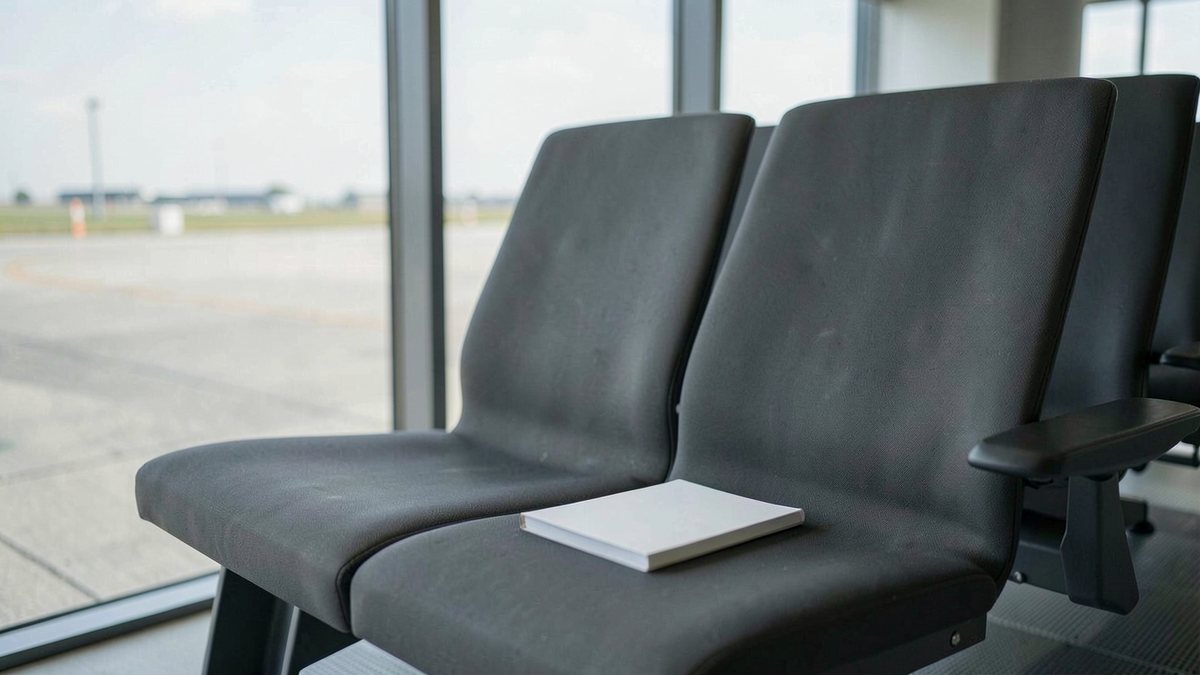
You can be apprehended on the grounds in CMK Article 90 and, if the prosecutor's office does not release you, held in custody within the limits of CMK Article 91.
Apprehension. Under CMK Article 90(4), after taking measures to prevent escape or harm, law enforcement informs the apprehended person of their legal rights at once. Under CMK Article 90(5), the prosecutor is informed straight away and the officers act on the prosecutor's instructions.
Custody limits. Under CMK Article 91(1), custody cannot exceed twenty-four hours from the moment of apprehension, excluding the time needed to send the person to the nearest judge or court, which cannot exceed twelve hours. Under CMK Article 91(2), custody depends on the measure being necessary for the investigation and on concrete evidence showing a suspicion that the person committed an offence.
Challenging custody. Under CMK Article 91(5), against the prosecutor's written order on apprehension, custody or extending custody, the person, their lawyer, legal representative, spouse or a first- or second-degree blood relative can apply to the criminal judge of peace for immediate release.
Family and consulate. Under CMK Article 95(1), on the prosecutor's order a relative or a person the suspect names is informed without delay of the apprehension or custody. Under CMK Article 95(2), if the apprehended person is a foreign national, their consulate is informed unless they object in writing.
6. What Are Your Rights When Giving a Statement?
You have the right to a lawyer, the legal right not to make a statement about the accusation and, if you do not know Turkish well enough to express yourself, an interpreter.
Before the statement. Under CMK Article 147(1), you must answer questions about your identity truthfully (a), the accusation is explained to you (b), you are told of your right to choose a lawyer (c), and you are told that you have the legal right not to make a statement about the accusation (e). Under CMK Article 147(1)(i), the statement is recorded in writing, and if you decline to sign, the reasons are noted.
The lawyer. Under CMK Article 149(3), the lawyer's right to meet the suspect, to be present during the statement and to give legal help cannot be prevented or restricted. Under CMK Article 154(1), the suspect can meet their lawyer at any time, without a power of attorney, in a place where others cannot hear. Under CMK Article 150(1), a suspect who says they are unable to choose a lawyer has one appointed on request.
Interpreter. Under CMK Article 202(1) and (3), the essential points are translated for a suspect who does not know Turkish well enough to express themselves, and in the investigation stage the interpreter is appointed by the judge or the prosecutor.
Foreign nationals. Under TCK Article 8(1), Turkish laws apply to offences committed in Türkiye, and the Article does not mention nationality.
7. Remand, Judicial Control and an Exit Ban
Remand. Under CMK Article 100(1), remand can be ordered where concrete evidence shows strong suspicion and a ground for remand exists, and it cannot be ordered where it would be disproportionate to the importance of the matter or the expected penalty or security measure. Under CMK Article 100(4), remand cannot be ordered for offences carrying a judicial fine alone or, apart from intentional offences against bodily inviolability, offences whose maximum prison term is not more than two years. The statutory upper limits differ across the provisions above: two years in TCK Article 106(1), seven in TCK Article 106(2), four in TCK Article 213(1) and three in TCK Article 265(1).
Judicial control. Under CMK Article 109(1), where the grounds for remand in Article 100 exist, the suspect can be placed under judicial control instead of being remanded. Under CMK Article 109(2), the judicial control provisions can also be applied where the law bars remand. Under CMK Article 109(3)(a), judicial control can include not leaving the country ("yurt dışına çıkamamak"), and under CMK Article 109(3)(b) reporting regularly to places set by the judge.
Ask your lawyer whether an exit ban has been requested or ordered, and keep every paper you are given.
8. If You Have Been Stopped: Step by Step
- Stay calm and step back from the exchange; keep your explanation for the statement, with a lawyer.
- Answer identity questions truthfully; whether to say more about the accusation is your choice (CMK Article 147(1)(a) and (e)).
- Ask what you are accused of, and ask for a lawyer and, if needed, an interpreter (CMK Articles 147, 150 and 202).
- Your consulate is informed unless you object in writing (CMK Article 95(2)).
- Read the statement record before signing; if you decline to sign, the reasons are noted (CMK Article 147(1)(i)).
- Before leaving Türkiye, check with a lawyer whether judicial control or an exit ban was ordered (CMK Article 109(3)(a)).
If you or someone travelling with you has been stopped at Istanbul Airport or at Sabiha Gökçen after an argument, a lawyer can explain these rules in your language and look at the records you were given. See also our pages on criminal defence, police custody, giving a statement (ifade) and exit bans.
Frequently asked questions
Is shouting "I will hit you" at airline staff a crime in Türkiye?
It can be. Under TCK Article 106(1), threatening someone with an attack on their life or bodily or sexual inviolability carries six months to two years. Whether particular words meet that definition depends on the words, the context and intent, which the prosecutor and the court assess.
Does the person I threatened have to file a complaint?
For a threat to life, body or sexual inviolability under TCK Article 106(1), the text contains no complaint requirement. For a threat of major damage to property or of some other evil, the same paragraph says the penalty is imposed on the victim's complaint, and TCK Article 73(1) sets a six-month period for complaining.
Can a threat case be settled through conciliation?
CMK Article 253(1)(b)(3) brings threat under TCK Article 106(1) within conciliation, whether or not it depends on a complaint. The aggravated threat in TCK Article 106(2) is not on that list. Under CMK Article 253(3), conciliation rules are not applied where an offence within conciliation is committed together with an offence outside it against the same victim, but a sentence added by Law No. 7571 of 24 December 2025 provides that where an offence within prepayment and an offence within conciliation are committed together against the same victim, conciliation rules apply to the offence within conciliation.
Is threatening a police officer treated more harshly?
TCK Article 106 has no separate rule for public officials. TCK Article 265(1) is a separate offence: using force or threats against a public official to prevent them from performing their duty carries six months to three years, with increases in TCK Article 265(3) and (4).
What is the difference between a threat and a bomb joke?
A threat under TCK Article 106 is aimed at a person. TCK Article 213(1) covers a public threat made for the purpose of creating anxiety, fear and panic among the public, with two to four years. Our bomb joke guide covers it.
Will I be stopped from leaving Türkiye?
The texts do not answer that for any individual. Under CMK Article 109(3)(a), judicial control can include not leaving the country, and under CMK Article 109(2) judicial control can be applied even where the law bars remand. Ask your lawyer whether such a measure was requested or ordered.



This page is general information about Turkish law and procedure, not legal advice, and reading it does not create an attorney–client relationship. Laws and practice change and every case turns on its own facts, so please do not rely on it for your situation; speak with a lawyer first.
Related guides
All guides →Criminal Investigation vs Prosecution in Türkiye: The Stages
Confused about where your case stands in Türkiye? A plain-English guide to the stages — investigation (soruşturma) by the prosecutor, the decision to prosecute, trial (kovuşturma), and appeal — and where your defence acts at each one.
9 min readCriminal Law & Airport ArrestsAccused of Theft at Istanbul Airport
A theft accusation at Istanbul Airport can be a perfume that never reached the till, a bag lifted from a trolley or a phone that vanished from a lounge. The label the prosecutor attaches decides everything — simple theft under TCK 141 carries one to three years and can end in reconciliation, aggravated theft under TCK 142 carries three to seven and cannot. This guide explains the classification, the catalogue-offence detention risk, the return-and-repair discount in TCK 168, the reconciliation procedure in CMK 253 and what a foreign traveller should do in the first hour.
19 min readCriminal Law & Airport ArrestsStopped at Istanbul Airport for a Case from Years Ago
A Turkish criminal file from ten or fifteen years ago can still put a hit on the passport-control screen, even when the statute of limitations has long expired. Turkish law runs two separate clocks, prosecution and execution, and neither is applied by the border officer. This guide explains the periods in TCK Articles 66 and 68, what suspends or restarts them, why being declared a fugitive freezes the clock entirely, and how a time-barred case is formally closed.
16 min readRelated service: Facing a Criminal Case in Türkiye → · All airport legal services →
Speak with a lawyer
One message is all it takes. We answer 24 hours a day, every day of the year, for IST and Sabiha Gökçen.
Prefer to write? Send a written request (the form opens on Lexin Legal's website).