Asked to Give a Statement (Ifade) at Istanbul Airport? Rights First
Asked to give a statement (ifade) at Istanbul Airport? What a statement is, who can take it, and your right to silence, a lawyer, and an interpreter — first.

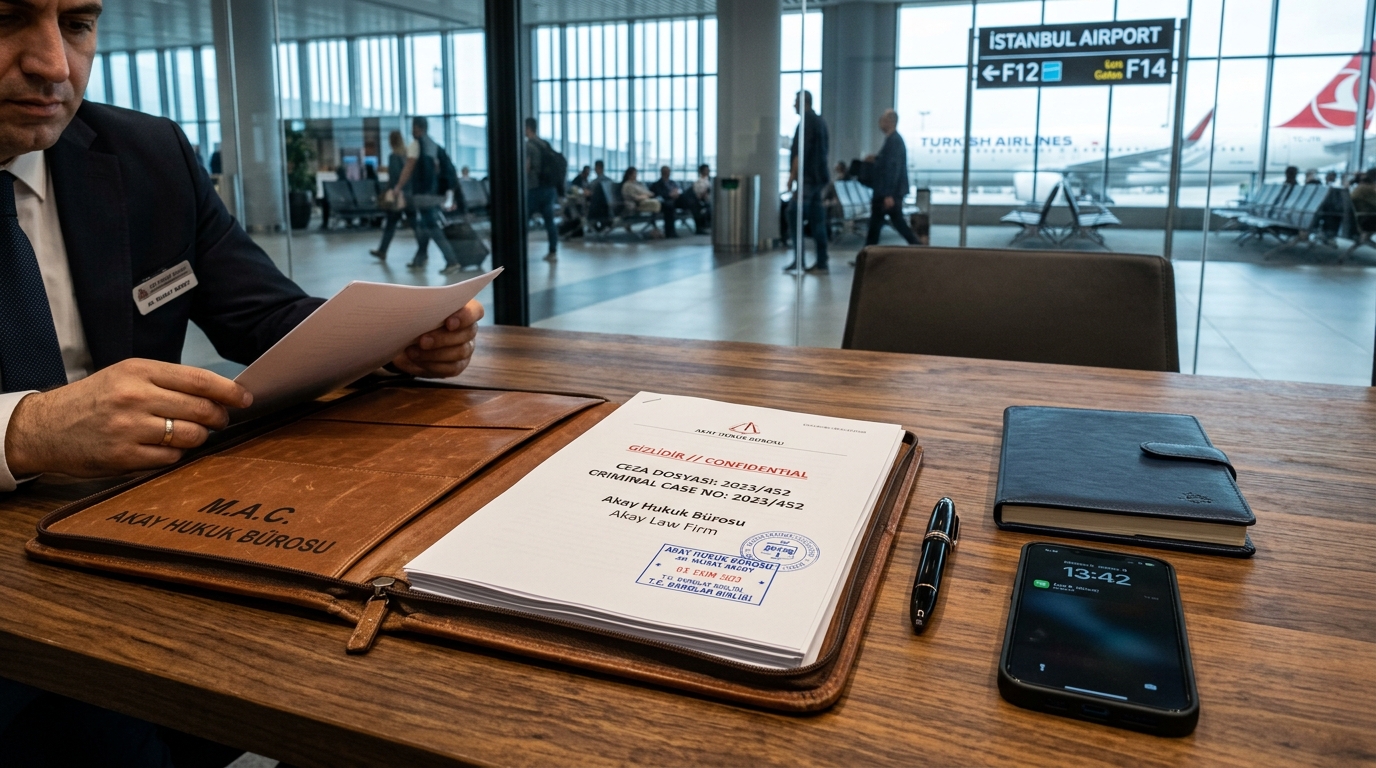
If an officer at Istanbul Airport (IST) or Sabiha Gökçen (SAW) asks you to give a statement (ifade), the most important thing to know is this: you have the right to remain silent, and the right to a lawyer before you say anything. Being asked for a statement does not mean you are guilty — it is a step in a process. But what you say, and what you sign, in those first hours can matter for a long time. The calmest, strongest move is to ask for a lawyer and not give a statement without one.
This article is general information about Turkish criminal procedure, not legal advice, and nothing here implies anyone is guilty. Rules and time limits change and every case turns on its facts. Do not rely on it for your situation — speak with a lawyer.
What is a statement (ifade)?
A statement (ifade) is your formal, recorded account of the events being looked into — your answers to the questions investigators put to you. It is taken down in writing (and sometimes recorded), read back, and signed. Once it is signed, it becomes part of the case file and is hard to undo or take back. That is why a statement is not a casual conversation to "clear things up" on the spot — it is a formal step with real weight, and it is far better to give it with a lawyer beside you, or not at all until you have one.
Who can take your statement — police or prosecutor?
In broad terms, a statement can be taken by the police during the early investigation, or by the public prosecutor (savcı) who directs that investigation, and later you may be heard by a judge. These are different stages, and the setting matters. Your core rights — silence, a lawyer, an interpreter — apply throughout, whoever is asking. You do not lose the right to a lawyer because it is "only" the police asking, or because someone says it will "be quicker" without one. If you are unsure who is questioning you or why, that is itself a reason to wait for a lawyer.
Do I have to give a statement?
No. You have the right to remain silent. You do not have to answer questions or give a statement, and choosing silence is not an admission of anything — it cannot lawfully be treated as a sign of guilt. You can give your identity details and still decline to answer questions about the matter itself until your lawyer is present. Silence now does not close any door; a hurried statement can. If you take only one thing from this page: you may say, calmly, that you wish to remain silent and to speak to a lawyer first.
Can I have a lawyer before and during the statement?
Yes. You have the right to a lawyer, including before you give any statement and during the questioning. This is one of the most important protections you have, and it exists precisely for moments like this — when you are tired, far from home, under pressure, and being asked to commit an account to paper. A lawyer can make sure the questions are proper, that you understand what is being asked, that nothing is recorded inaccurately, and that nothing is signed under pressure. Ask for a lawyer clearly and early, and do not let anyone talk you out of it. Our police custody (gözaltı) page explains how this fits into the wider process.
What if I don't speak Turkish — can I get an interpreter?
Yes. If you do not understand Turkish well enough to follow the questions and your answers, you have the right to an interpreter (tercüman). A statement only protects you if it truly reflects what you meant to say — and that is impossible if it is taken in a language you do not fully command. Do not try to "get by" in broken Turkish or rely on a stranger to translate informally. Ask, clearly, for an interpreter, and wait for one. The same applies to anything put in front of you to read: you are entitled to understand it, in a language you speak, before you respond to it.
Why shouldn't I give a statement without a lawyer?
Because a statement is easy to give and very hard to take back. Under pressure, in a stressful airport setting, in a second language, it is easy to phrase something poorly, guess at a detail, agree with a question just to end the conversation, or leave out context that matters. None of that is in your interest, and a signed statement carries weight afterwards. A lawyer is not there to help you hide anything — they are there to make sure your account is accurate, voluntary, properly recorded, and given on your terms rather than under pressure. We never promise an outcome; we act to protect your rights, and one of the simplest ways to do that is to make sure you are not questioned alone.
What should I not sign?
Do not sign anything you do not fully understand. That includes the statement itself, any waiver, any form, and any document in Turkish you cannot read. Before you sign:
- Ask for it to be read back to you, through an interpreter if needed.
- Make sure it actually reflects what you said — not a tidied-up or shifted version.
- If something is wrong or missing, say so before signing, and ask for it to be corrected.
- If you are not sure, wait for your lawyer before signing anything.
A signature is not a formality. It is you confirming the document is true and yours. If you have not understood it, you are not in a position to confirm that — so don't.
Can I be held while this happens?
Sometimes, yes. Depending on the matter, you may be questioned and, in some cases, taken into police custody (gözaltı) — a limited hold during an investigation — while the statement process and other steps take place. The law sets time limits on this. From there, the file goes to the public prosecutor, who decides the next step: you may be released, released under judicial control (adli kontrol), or brought before a judge. Being held is not a verdict; it is a procedural stage, and you keep your rights throughout it. Our arrested at the airport page sets out what tends to happen next.
Can my family or consulate be told?
In general terms, you have the right to have a relative or someone close to you notified that you are being held, and — if you are a foreign national — to have your consulate informed in appropriate cases. This matters in practice: it lets someone on the outside contact a lawyer for you, send help, and keep track of where you are. If you are alone at the airport, ask that someone be notified, and ask that a lawyer be contacted. Even a short message to a relative with your terminal and situation can set real help in motion.
Frequently asked questions
What is a statement (ifade)?
It is your formal, recorded account of the events being investigated — your answers, written down, read back, and signed. Once signed, it is part of the file and hard to undo, which is why it is best given with a lawyer present.
Do I have to answer questions or give a statement?
No. You have the right to remain silent. You can decline to answer questions about the matter and ask to speak to a lawyer first. Silence is not an admission of guilt and cannot lawfully be treated as one.
Can I insist on a lawyer before I say anything?
Yes. You have the right to a lawyer before and during any statement. Ask clearly and early, and do not let anyone persuade you that it will "go faster" without one. Being questioned alone is exactly what the right is meant to prevent.
What if I don't understand Turkish?
You have the right to an interpreter. Do not give a statement, and do not sign anything, in a language you do not fully understand. Ask for an interpreter and wait — a statement only protects you if it truly reflects what you meant.
What should I not sign?
Anything you do not fully understand — the statement, any waiver, any Turkish-language form. Ask for it to be read back through an interpreter, check that it matches what you said, and if in doubt, wait for your lawyer before signing.
Can someone be told that I'm being held?
In general, yes — you can have a relative notified, and your consulate informed in appropriate cases. That lets someone outside contact a lawyer and help. If you are alone, ask that a relative be notified and a lawyer contacted.
Being asked for a statement is unsettling — but it is a process with rules, and your strongest, calmest move is to stay silent, ask for a lawyer, and not sign what you do not understand. If you or someone you know has been asked to give a statement at IST or Sabiha Gökçen, reach out: guidance can start on WhatsApp. Learn more on our police custody and arrested at the airport pages, or message us directly.



This page is general information about Turkish law and procedure — not legal advice, and reading it does not create an attorney–client relationship. Laws and practice change and every case turns on its own facts, so please do not rely on it for your situation; speak with a lawyer first.
Related guides
All guides →Police Custody in Türkiye (Gözaltı): Your Rights Explained
Held in police custody (gözaltı) in Türkiye, or worried you might be? A plain-English guide to your right to silence, your right to a lawyer, and what happens next.
6 min readCriminal defenceWhat Happens at the Police Station After an Airport Arrest
Arrested at Istanbul Airport and taken to a police station? The sequence — custody, statement, prosecutor, duty judge — and why the first hours matter most.
9 min readDetention & holdingDetention vs Arrest in Türkiye: Gözaltı, Tutuklama, Gözetim
Gözaltı, tutuklama and idari gözetim are not the same in Türkiye — different laws, different decision-makers, different exits. How to tell them apart.
13 min readRelated service: Police custody & giving a statement → · All airport legal services →
Speak with a lawyer
One message is all it takes. We answer 24 hours a day, every day of the year — for IST and Sabiha Gökçen.