Giving Statements Under Police Interrogation at Istanbul Airport: Procedural Rights & Defense Under CMK Art. 147 & 154
Legal defense guide for foreign travelers detained at Istanbul Airport (IST/SAW): right to silence, mandatory lawyer access, translation safeguards, and interrogation defense.
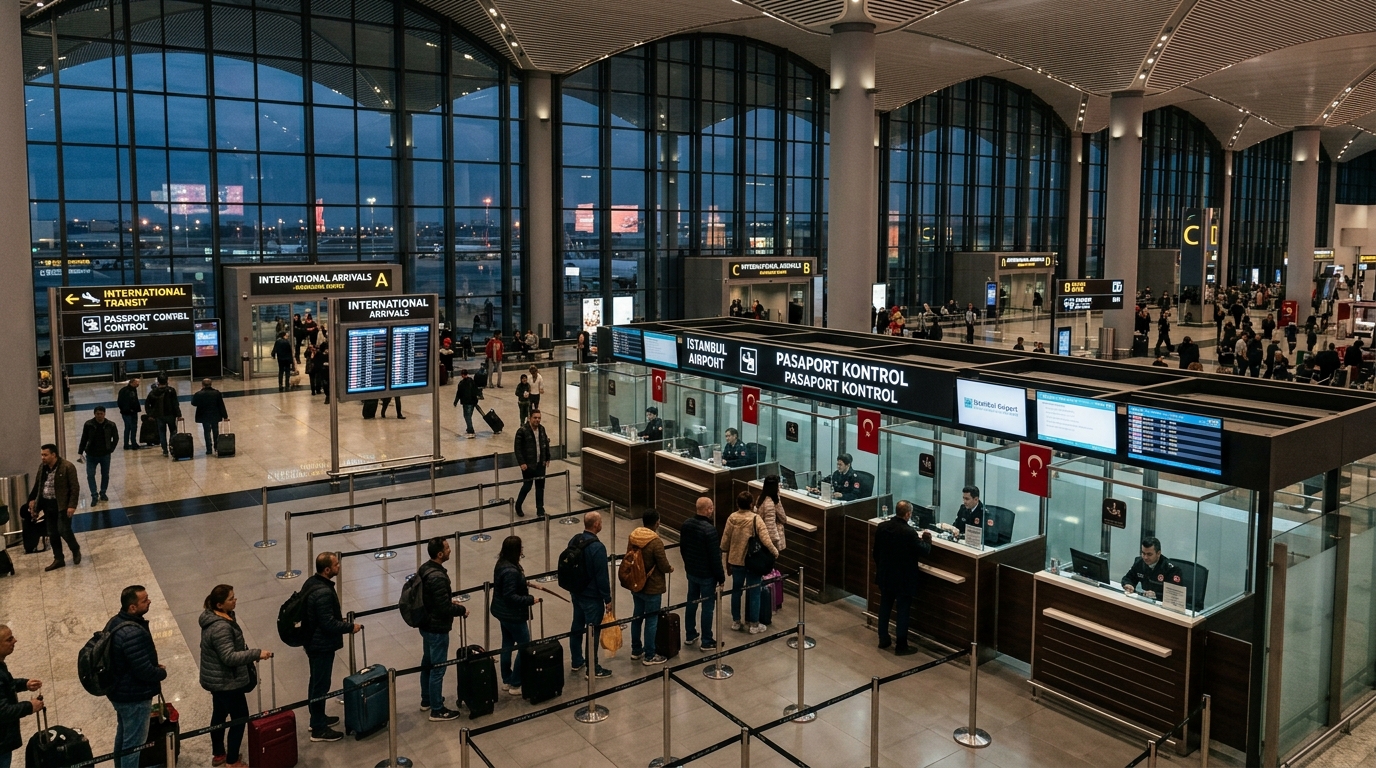
Landing at Istanbul Airport (IST) or Sabiha Gökçen Airport (SAW) and being escorted by border police to an airport holding room or the Airport Police Directorate (Havalimanı Emniyet Şube Müdürlüğü) is an overwhelming experience. Foreign nationals stopped due to GBT search warrants, customs irregularities, INTERPOL diffusions, or financial investigations are routinely pressured to provide an immediate written or recorded statement (ifade).
Under the Turkish Code of Criminal Procedure (Law No. 5271 - CMK), suspects possess absolute constitutional and procedural safeguards. What you say—or fail to say—during your initial police or prosecutor interrogation forms the permanent factual foundation of your criminal file. Exercising your statutory Right to Absolute Silence (CMK Art. 147/1-e) and demanding Privileged Access to Independent Legal Counsel (CMK Art. 154) before uttering a single word is your most critical legal protection.
1. Mandatory Procedural Safeguards Under CMK Article 147
Under Article 147 of the Turkish Code of Criminal Procedure, law enforcement officers and public prosecutors are legally mandated to observe strict procedural protocols before and during any interrogation:
| Statutory Procedural Step | CMK Legal Basis | Mandated Safeguard & Legal Protection | Violation Consequence |
|---|---|---|---|
| Notification of Charges | CMK Art. 147/1-b | The suspect must be clearly informed of the specific criminal allegation and underlying facts. | Statement obtained without disclosure of charges is legally defective. |
| Right to Legal Counsel | CMK Art. 147/1-c | Right to select private defense counsel or have a Bar-appointed lawyer present during questioning. | Interrogation conducted without lawyer present cannot be used as evidence. |
| Right to Absolute Silence | CMK Art. 147/1-e | Explicit warning that the suspect is under no legal obligation to provide explanations. | Inferences of guilt from silence are strictly prohibited under Turkish law. |
| Right to Present Evidence | CMK Art. 147/1-f | Right to request collection of exculpatory concrete evidence and witness testimony. | Prosecutors must investigate both incriminating and exculpatory facts. |
| Audio-Visual Recording | CMK Art. 147/1-h | Utilization of technical recording facilities (SEGBİS) during formal prosecutor/judge questioning. | Verbatim transcription required in official record. |
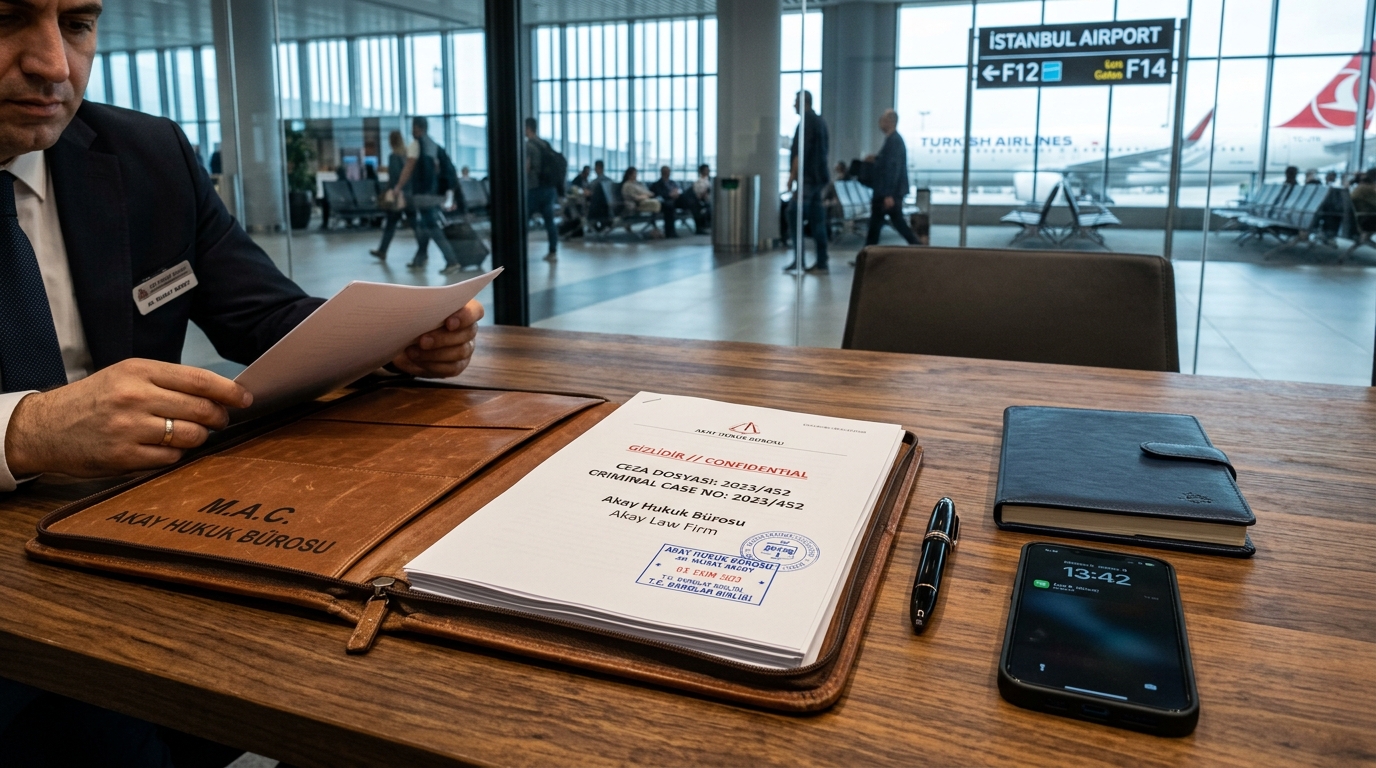
2. Privileged Access to Defense Counsel (CMK Art. 154)
Under CMK Article 154/1, a detained suspect is entitled to consult with their attorney at any time, in private, without requiring a formal power of attorney (vekaletname), and in an environment where conversations cannot be overheard by police officers.
Police officers at Istanbul Airport cannot condition your right to speak with a lawyer on prior notarised authorizations or bureaucratic approvals. Written correspondence and consultations between a defense attorney and a detained suspect are absolutely protected by professional attorney-client privilege and cannot be inspected or monitored.
3. Unlawful Interrogation Methods and Inadmissible Evidence (CMK Art. 148)
Under CMK Article 148, statements obtained through prohibited methods are strictly inadmissible in Turkish criminal courts:
- Prohibited Conduct: Torture, physical or psychological mistreatment, exhaustion, deception, administration of substances, or promises of unlawful advantages are strictly prohibited (CMK 148/1).
- Exclusionary Rule: Statements extracted through unlawful methods cannot be used as evidence, even if the suspect subsequently consents to their admission (CMK 148/3).
- Unrepresented Police Statements: Statements taken by police in the absence of defense counsel cannot form the basis of a criminal conviction unless confirmed by the suspect in person before the judge or court (CMK 148/4).
4. Sworn Court Interpreters and Foreign Language Protocol
Under CMK Article 202, foreign suspects who do not speak Turkish have the mandatory right to be assisted by an official sworn court interpreter throughout the entire interrogation process free of charge. You should never sign an interrogation record (İfade Tutanağı) written in Turkish unless it has been translated to you sentence by sentence by an official interpreter in the presence of your defense attorney.
Frequently Asked Questions
Can I refuse to answer police questions at Istanbul Airport?
Yes. Under CMK Art. 147/1-e, you have an absolute constitutional right to remain silent. Remaining silent cannot be used as an admission of guilt or cited as evidence against you.
Do I need a notarised power of attorney before a lawyer can visit me in airport detention?
No. Under CMK Art. 154/1, a licensed Turkish criminal defense lawyer may visit and advise any detained suspect immediately upon presentation of their Bar Identity Card, without requiring a notarised power of attorney.
What happens if I signed a police statement without an interpreter?
Statements taken without a sworn interpreter violate CMK Art. 202 and fundamental rights of defense, rendering the record vulnerable to procedural annulment before the criminal court.
How long can police hold a foreign national in custody before seeing a judge?
Under CMK Art. 91, individual custody is limited to a maximum of 24 hours (excluding transit time up to 12 hours). For collective crimes, a prosecutor may extend detention up to 4 days.
What is the difference between giving a statement to the police versus the public prosecutor?
Police gather initial investigative statements under prosecutor instructions, whereas the Public Prosecutor (Cumhuriyet Savcısı) decides whether to release the suspect, order judicial control (adli kontrol), or refer the suspect to the Magistrate (Sulh Ceza Hakimliği) for formal arrest (tutuklama).

This page is general information about Turkish law and procedure — not legal advice, and reading it does not create an attorney–client relationship. Laws and practice change and every case turns on its own facts, so please do not rely on it for your situation; speak with a lawyer first.
Speak with a lawyer
One call or message is all it takes. We answer 24 hours a day, every day of the year — for IST and Sabiha Gökçen.