Photos or Video at Istanbul Airport: Offences, Stops and Your Rights
Can a photo or video at a Turkish airport get you stopped? What Law No. 2565, the TCK and the CMK say on zones, offences and your rights if held.
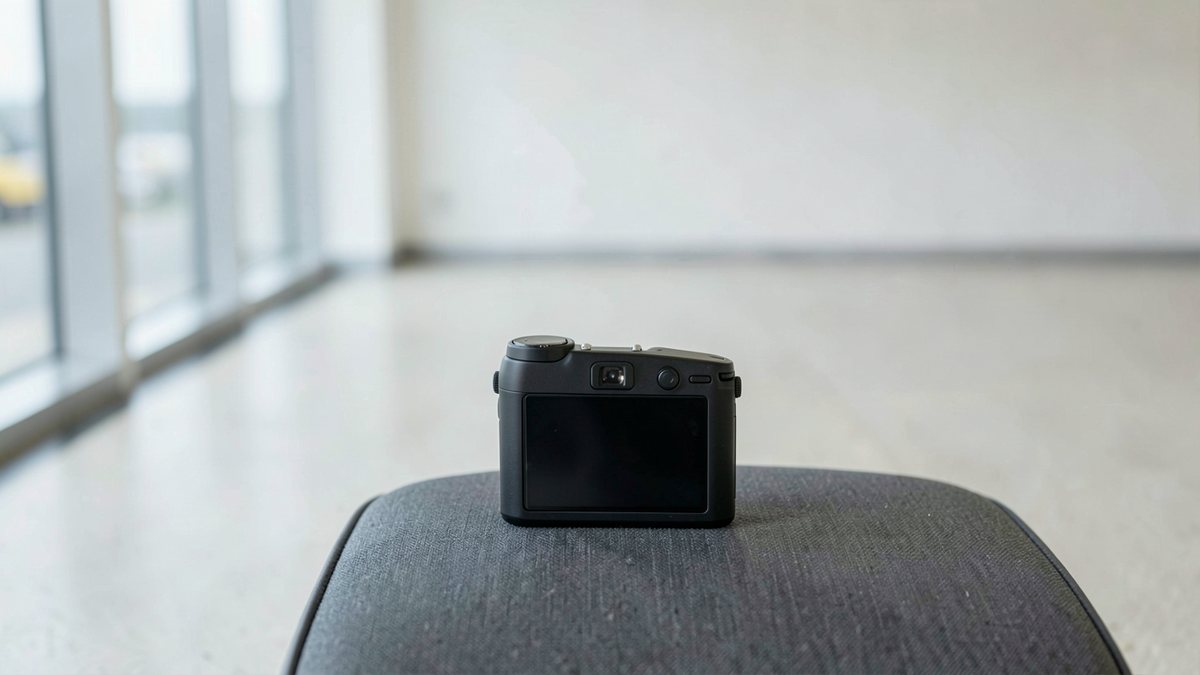
Yes, taking photos or video at a Turkish airport can get a traveller stopped, although none of the Turkish texts read for this guide says that photography is banned at airports as such. The rules attach to particular places and conduct: the photography bans under Law No. 2565 on military forbidden zones and security zones, the privacy offences in TCK Articles 133 to 136 of the Turkish Penal Code (Law No. 5237, the TCK), and the state-secrets offences in TCK Articles 326 to 339. Police can stop a person on the grounds in Law No. 2559 Article 4/A, and a person who is apprehended has the rights in the Code of Criminal Procedure (Law No. 5271, the CMK).
This guide reads those texts as they stand on 5 November 2026. It is general information, not advice on a particular case and describes no real incident. It gives no method for filming unnoticed. Where a sign or an officer tells you to stop, stop, and take the question to a lawyer.
1. Is Photography Banned at Turkish Airports?
None of the texts read for this guide contains a general ban. That is a statement about those texts, not a permission.
Under Law No. 2920 Article 40 (the Turkish Civil Aviation Law), the security measures and prohibited matters that persons and passengers must follow are set by regulation. The current one, the Civil Aviation Security Regulation (SHY-Güvenlik) of 22 May 2026, has no article on photographing or filming by passengers. It leaves a number of measures to the National Civil Aviation Security Programme (MSHGP), which is not among the texts read here. Law No. 2920 Article 93(d) lists, among things prohibited during flight, photographing places under a photography ban ("fotoğraf çekme yasağı olan yerlerin fotoğrafını çekmek"), without naming those places.
Signs, operator rules and on-the-spot instructions are not in these texts, and a rule can exist in one of them.
2. Is an Airport a Military Zone Under Law No. 2565?
No text read for this guide says that IST or SAW is a military zone. Law No. 2565 applies to zones established or maintained under it, so the first question is whether the place photographed is such a zone.
The zones. Under Law No. 2565 Article 2, military forbidden zones are created by Presidential decision and are first or second degree. Under Article 19, security zones are either special security zones or military security zones.
The bans. Article 7(1)(e) bans, in first-degree land zones, photographing or filming the zone, drawing maps or sketches, taking notes and similar activities, except for persons assigned for that purpose or permitted by the General Staff. Article 9(h) applies the same ban in second-degree land zones, and Article 21(e) applies a matching ban, with permission from the unit command concerned, to Armed Forces installations determined as military security zones. Article 17(b) makes aerial photography in second-degree air zones subject to the General Staff's positive opinion.
The penalties. Where the act does not require a heavier penalty, Article 25(a) provides six months to five years' imprisonment and a fine for breaching Article 7(1)(e), and Article 26 provides three to six months and a fine for not following the bans in Articles 9, 17 and 21, among others. The sums in the 1981 text are not reproduced here.
3. What Is a Special Security Zone, and Does It Cover Istanbul Airport?
A special security zone is a separate category from a military forbidden zone, and it is where airports appear in the texts. The Regulation names one for Istanbul Airport, but its boundaries were not among the texts found for this guide.
Airports in the Regulation. Under Law No. 2565 Article 20(a), special security zones can be created around places and facilities of strategic value belonging to public or private bodies. The Regulation on Military Forbidden Zones and Security Zones, in its Art. 21(1), lists "büyük liman ve hava meydanları" (large ports and airfields) among those facilities. It also refers to the "İstanbul Havalimanı Özel Güvenlik Bölgesi" when fixing a limit of 2 miles seaward for the part of that zone at sea. It does not name Sabiha Gökçen.
The ban. Art. 22(9) of the Regulation bans photographing or filming the area determined as a special security zone, drawing maps or sketches, taking notes and similar activities, except for persons assigned for that purpose or permitted by the unit command or ministry concerned.
The unknown. Under Law No. 2565 Article 4, a zone's limits appear in the maps and coordinate lists annexed to the Presidential decision. That decision was not found, so this guide cannot say whether a given hall, gate, view of the apron or access road falls inside the zone.
Signs. Art. 23(1) of the Regulation provides signs reading "SPECIAL SECURITY ZONE ENTRANCE FORBIDDEN" for expropriated security zones, and Art. 23(2) says zones not expropriated are not marked on the ground. The absence of a sign does not settle the question.
Is a breach a crime? Law No. 2565 Article 21(e) names military security zones, and Article 26 punishes breach of the bans in Article 21. The Regulation's wording is wider because it adds special security zones. Under TCK Article 2(2), crimes and penalties cannot be created by the administration's regulatory acts. The text does not say whether Article 26 reaches a photograph of a special security zone. The prosecutor and the court assess that, and it is a point to raise with a lawyer.
4. Can Police Stop You for Taking Photos?
They can where the conditions of Law No. 2559 Article 4/A are met. The Article does not mention photography; the test is its listed purposes and a reasonable cause.
The stop. Under Law No. 2559 Article 4/A, police can stop people to prevent an offence or a misdemeanour, to identify perpetrators, or to prevent an existing or possible danger, among other listed purposes. The officer needs a reasonable cause based on experience and on the impression formed from the situation. The police tell the person the reason, can ask about it and can ask for identity documents. The stop cannot last longer than the procedure requires.
Patrols and checks. Under SHY-Güvenlik Article 24(2), the purposes of surveillance, patrols and other physical checks at airports include analysing suspicious behaviour indicating that a person may carry out an unlawful act; the Article does not mention photography. Under Law No. 2920 Article 40, passengers and their belongings are checked and searched, when passing into airports and aircraft, by technical devices and by hand where needed, limited to preventing a breach of aviation security; the CMK provisions on judicial search are reserved.
Identity and orders. Under Law No. 5326 Article 40(1) (the Misdemeanours Law), refusing to give identity or address details to a public official who asks in connection with their duty, or giving false ones, brings an administrative fine. Under Law No. 5326 Article 32(1), disobeying an order lawfully given by competent authorities for judicial procedures or for public security, public order or general health brings an administrative fine, and under Article 32(2) that Article can be applied only where the relevant law expressly provides for it.
5. Which Offences Can Actually Be Involved?
Besides the zone rules above, two groups can be involved: the privacy offences and the state-secrets offences. Whether any fits depends on what was recorded, where, with what aim and what was done with it.
Privacy and personal data. Under TCK Article 134(1), violating the privacy of a person's private life carries one to three years, and where this is done by recording images or sounds the penalty is increased by one fold ("bir kat artırılır"). Under TCK Article 139(1), investigation and prosecution of Articles 133 and 134 depend on a complaint, while Articles 135 and 136 do not. Under CMK Article 158(1), a complaint can be made to the prosecutor's office or law enforcement. The texts do not list which airport scenes fall within private life or personal data; the prosecutor and the court assess that.
State secrets. These Articles speak of information, not of cameras. TCK Articles 327 and 328 cover obtaining information that by its nature must remain secret for the State's security or its internal or external political interests, and Article 328 adds the aim of political or military espionage ("siyasal veya askerî casusluk maksadıyla"). TCK Article 334 covers information that competent authorities have prohibited from disclosure under laws and regulatory acts and that must by its nature remain secret. Heavier forms apply in the wartime and related cases the Articles list.
Intent. Under TCK Article 21(1), an offence requires intent, meaning that the elements of its legal definition are carried out knowingly and willingly. Under TCK Article 22(1), negligent acts are punished where the law expressly says so, and in this chapter TCK Articles 329(3), 336(3) and 338 do. The texts do not say that a picture of a public concourse is secret information; each element has to be established.
6. The Provisions Side by Side
The table does not say which provision fits a particular event.
| Provision | Act named in the text | Consequence in the text |
|---|---|---|
| Law No. 2565 Article 25(a) | Breach of the Article 7(1)(e) ban | Six months to five years and a fine, if no heavier penalty applies |
| Law No. 2565 Article 26 | Not following the bans in Articles 9, 13, 17, 18 and 21 and Article 11(b) | Three to six months and a fine, if no heavier penalty applies |
| TCK Article 133(2) | Recording with a sound device, without the other speakers' consent, a non-public conversation you took part in | Six months to two years or a judicial fine |
| TCK Article 134(1) | Violating the privacy of private life; recording images or sounds | One to three years; increased by one fold for recording |
| TCK Article 134(2) | Unlawfully disclosing images or sounds relating to private life | Two to five years |
| TCK Article 135(1) | Unlawfully recording personal data | One to three years |
| TCK Article 136(1) | Unlawfully giving, spreading or obtaining personal data | Two to four years |
| TCK Article 327(1) | Obtaining information that must by its nature remain secret for the State's security or political interests | Three to eight years |
| TCK Article 328(1) | The same, with the aim of political or military espionage | Fifteen to twenty years |
| TCK Article 329(1) | Disclosing such information | Five to ten years |
| TCK Article 334(1) | Obtaining information that competent authorities prohibited from disclosure and that must by its nature remain secret | One to three years |
| TCK Article 336(1) | Disclosing that information | Three to five years |
| TCK Article 339(1) | Being caught with documents or anything of that kind that serve to obtain such information, with no acceptable reason for holding them | One to five years |
7. What Happens to Your Phone or Camera?
It can be taken as evidence. CMK Article 134 governs searches of computers, computer programs and computer files; its text does not name phones or cameras.
Seizure. Under CMK Article 123(1) and (2), items that appear useful as evidence, or that are subject to confiscation, are taken into safekeeping, and items not handed over voluntarily can be seized. Under CMK Article 127(3), a seizure without a judge's decision is submitted to the competent judge within twenty-four hours, and the judge announces a decision within forty-eight hours of the seizure, failing which it lapses.
Content. Under CMK Article 134(1), in an investigation, where there is strong suspicion based on concrete evidence and no other way of obtaining evidence, a judge or, where delay is harmful, the prosecutor decides on searching the computer, programs and computer files the suspect uses and on copying records. A prosecutor's decision goes to the judge within twenty-four hours, the judge decides within twenty-four hours at the latest, and if that period ends or the judge decides otherwise the copies are destroyed at once. Under Article 134(2), devices can be seized where, among other cases, a password cannot be broken, and they are returned without delay once the password is resolved and copies are taken. Under Article 134(3) and (4), the data are backed up during a seizure, and a copy of the backup is given to the suspect or their lawyer.
A date to note. A footnote to the official text records that the Constitutional Court annulled CMK Article 134 and that the annulment takes effect on 25 February 2027. Read any search after that date against the text then in force.

8. Can You Be Held at the Airport, and for How Long?
You can be apprehended on the grounds in CMK Article 90 and, if the prosecutor's office does not release you, held in custody within the limits of CMK Article 91.
Under CMK Article 90(4) and (5), law enforcement, after taking safety measures, immediately informs the person of their legal rights, and the prosecutor is informed at once. Under CMK Article 91(1), custody cannot exceed twenty-four hours from apprehension, excluding the time needed to reach the nearest judge or court, which cannot exceed twelve hours. Under CMK Article 91(2), custody depends on the measure being necessary for the investigation and on concrete evidence showing a suspicion that the person committed an offence. Under CMK Article 91(3), for offences committed collectively, the prosecutor can order in writing an extension of up to one day at a time, for three days, because of difficulty in gathering evidence or the number of suspects. Under CMK Article 91(5), against the apprehension or the prosecutor's written order on custody, the person, their lawyer or legal representative, spouse, or a first- or second-degree blood relative can apply to the criminal judge of peace for immediate release.
9. What Are Your Rights When Giving a Statement?
You have the right to a lawyer, to an interpreter if you do not know Turkish well enough to express yourself, and the legal right not to make a statement about the accusation.
Before the statement. Under CMK Article 147(1), you must answer questions about your identity truthfully (a), the accusation is explained to you (b), and you are told of your right to choose a lawyer (c) and of the legal right not to make a statement about the accusation (e). Under CMK Article 148(4), a statement taken by law enforcement without a lawyer present cannot form the basis of a judgment unless the suspect or defendant confirms it before a judge or court.
The lawyer. Under CMK Article 149(3), the lawyer's right to meet the suspect and be present during the statement cannot be prevented or restricted, and under CMK Article 154(1), the suspect can meet their lawyer at any time, without a power of attorney, where others cannot hear. CMK Article 154(2) adds a limit: for offences including the TCK's state-secrets and espionage chapter, a suspect's meeting with a lawyer in custody can be restricted for twenty-four hours by a judge's decision at the prosecutor's request, and no statement can be taken during that time.
Appointment. Under CMK Article 150(1), a suspect who says they are unable to choose a lawyer has one appointed on request. Under CMK Article 150(3), appointment without a request applies to offences whose minimum penalty is more than five years' imprisonment, as for TCK Article 328(1).
Consulate and interpreter. Under CMK Article 95(2), the consulate of a foreign national who is apprehended or in custody is informed unless they object in writing. Under CMK Article 202(1) and (3), the essential points are translated for a suspect who does not know Turkish well enough to express themselves, and in the investigation stage the judge or prosecutor appoints the interpreter.
10. Remand and Leaving Türkiye
Under CMK Article 100(1), remand can be ordered where concrete evidence shows strong suspicion and a ground for remand exists, and it cannot be ordered where it would be disproportionate. TCK Articles 326 to 339 are not on the list in CMK Article 100(3), which concerns offences for which a ground for remand can be presumed; the grounds in Article 100(2) stand apart from that list. Under CMK Article 100(4), remand cannot be ordered for offences carrying a judicial fine alone or, apart from intentional offences against bodily integrity, offences whose maximum prison term is not more than two years. Under CMK Article 109(3)(a), judicial control can include not leaving the country ("yurt dışına çıkamamak").
11. If You Have Been Stopped: Step by Step
- Stop recording when told to, and ask for the reason for the stop (Law No. 2559 Article 4/A).
- Answer identity questions truthfully; whether to say more about the accusation is your choice (CMK Article 147(1)(a) and (e)).
- Do not delete, edit or hide anything before you have spoken to a lawyer.
- Ask what you are accused of, and ask for a lawyer and, if needed, an interpreter (CMK Articles 147, 150 and 202).
- Read the statement record before signing; if you decline to sign, the reasons are noted (CMK Article 147(1)(i)).
- Keep every paper you are given, including any seizure record.
See also our pages on criminal defence, police custody, giving a statement (ifade) and exit bans.
Frequently asked questions
Is it illegal to take a selfie at Istanbul Airport?
None of the texts read for this guide makes a picture illegal simply because it was taken at an airport. The risk depends on what it shows and where it was taken, including the Regulation's ban on photographing a special security zone. Follow signs and instructions on the spot, and ask a lawyer afterwards.
Is Istanbul Airport a military zone?
No text read for this guide says so. The Regulation under Law No. 2565 refers to an "İstanbul Havalimanı Özel Güvenlik Bölgesi", a special security zone, which is a separate category.
Can officers make me show or delete my photos?
Under CMK Article 124(1), a person holding an item that appears useful as evidence must show and hand it over on request, although CMK Article 124(2) excludes suspects, and persons who may refuse to testify, from the sanction for refusing. CMK Article 134 sets the conditions for searching computers and computer files, and its text does not name phones or cameras. The texts read here contain no rule on deleting images on the spot, so ask for the basis to be stated and ask for a lawyer.
Should I delete images after being stopped?
Speak to a lawyer first. TCK Article 281(1) provides six months to five years for deleting the evidence of an offence to prevent the truth coming out, although under that paragraph no penalty is imposed on a person in relation to an offence they committed or took part in. Separately, under CMK Article 100(2)(b), behaviour raising strong suspicion of destroying or altering evidence can be taken as a ground for remand.
Can I film an officer who is questioning me?
No text read for this guide gives a right to do so or names it as an offence in those words. TCK Articles 133(2) and 134 are the provisions to discuss with a lawyer.
Does posting airport footage online change the risk?
It can, because disclosure is a separate act from taking the picture. TCK Articles 134(2), 136(1), 329(1) and 336(1) each cover forms of disclosure or spreading and each has its own elements.
I am a foreign traveller. Does Turkish law apply to me?
Under TCK Article 8(1), Turkish laws apply to offences committed in Türkiye, and the Article does not mention nationality. CMK Articles 95(2) and 202 add the consulate and interpreter rules.


This page is general information about Turkish law and procedure, not legal advice, and reading it does not create an attorney–client relationship. Laws and practice change and every case turns on its own facts, so please do not rely on it for your situation; speak with a lawyer first.
Related guides
All guides →Criminal Investigation vs Prosecution in Türkiye: The Stages
Confused about where your case stands in Türkiye? A plain-English guide to the stages — investigation (soruşturma) by the prosecutor, the decision to prosecute, trial (kovuşturma), and appeal — and where your defence acts at each one.
9 min readCriminal Law & Airport ArrestsAccused of Theft at Istanbul Airport
A theft accusation at Istanbul Airport can be a perfume that never reached the till, a bag lifted from a trolley or a phone that vanished from a lounge. The label the prosecutor attaches decides everything — simple theft under TCK 141 carries one to three years and can end in reconciliation, aggravated theft under TCK 142 carries three to seven and cannot. This guide explains the classification, the catalogue-offence detention risk, the return-and-repair discount in TCK 168, the reconciliation procedure in CMK 253 and what a foreign traveller should do in the first hour.
19 min readCriminal Law & Airport ArrestsStopped at Istanbul Airport for a Case from Years Ago
A Turkish criminal file from ten or fifteen years ago can still put a hit on the passport-control screen, even when the statute of limitations has long expired. Turkish law runs two separate clocks, prosecution and execution, and neither is applied by the border officer. This guide explains the periods in TCK Articles 66 and 68, what suspends or restarts them, why being declared a fugitive freezes the clock entirely, and how a time-barred case is formally closed.
16 min readRelated service: Facing a Criminal Case in Türkiye → · All airport legal services →
Speak with a lawyer
One message is all it takes. We answer 24 hours a day, every day of the year, for IST and Sabiha Gökçen.
Prefer to write? Send a written request (the form opens on Lexin Legal's website).