Counterfeit Goods in Your Luggage at Istanbul Airport: When a Fake Bag Is a Crime, When It Is Not, and What Customs Can Do (SMK 30, Customs Law 57)
A suitcase of imitation handbags, watches or sneakers can turn an Istanbul Airport departure or arrival into a criminal investigation. The offence in Article 30 of the Industrial Property Code requires a commercial purpose and a trademark registered in Türkiye, is prosecuted only on the rights holder's complaint, and is reconcilable; Article 57 of the Customs Law lets customs detain goods but expressly excludes travellers' personal effects and non-commercial gifts. What separates a personal purchase from a prosecution, and what to do in the first hours.
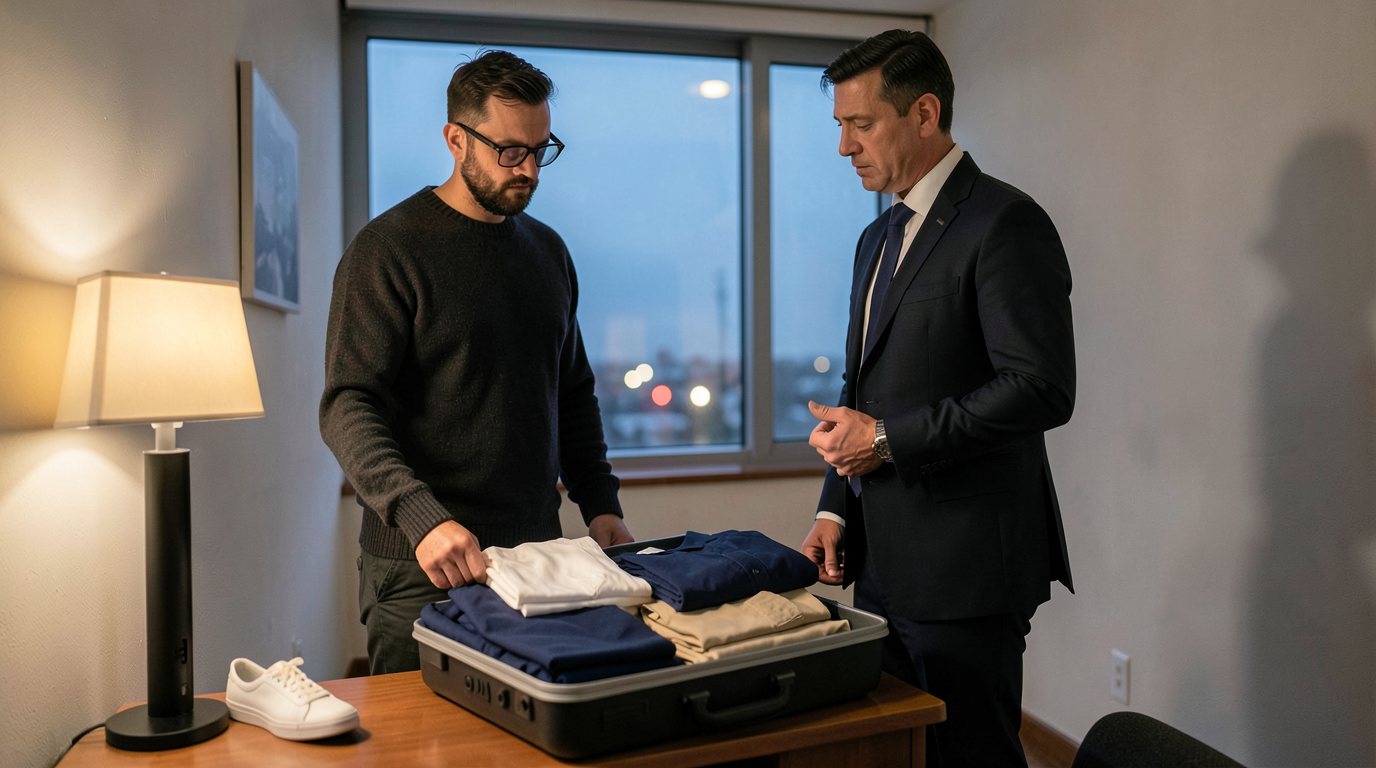
The scene is familiar to anyone who has watched the baggage hall at Istanbul Airport. A traveller's suitcase is opened and inside are twelve identical handbags carrying a famous logo, or thirty pairs of branded sneakers, or a tray of watches. Sometimes it is one bag, bought in the Grand Bazaar as a gift, and the traveller is astonished to be asked about it at all. The legal treatment of the two situations is very different, and the difference is written into two statutes: Article 30 of the Industrial Property Code (Sınai Mülkiyet Kanunu, SMK No. 6769), which defines the crime of trademark infringement, and Article 57 of the Customs Law (Gümrük Kanunu, Law No. 4458), which gives customs the power to stop goods that infringe intellectual property rights.
This guide explains where the line runs between a personal purchase and an offence, what customs may and may not do with a traveller's luggage, why the rights holder's complaint decides whether there is a case at all, how reconciliation can end the matter without a conviction, and what a foreign traveller should do in the first hours. The provisions were read in full in the current text of both laws before this guide was written; the sentences and time limits are those in force in September 2026.
1. The Offence: SMK Article 30 and the Commercial-Purpose Requirement
Article 30(1) of the Industrial Property Code punishes a person who infringes another's trademark right by imitation or confusing similarity and who produces goods or provides services, offers them for sale or sells them, imports or exports them, or who buys, possesses, transports or stores them for a commercial purpose, with imprisonment of one to three years and a judicial fine of up to twenty thousand days. The list of acts is deliberately long, and two of its items are the ones that reach travellers: importing or exporting the goods, and possessing or transporting them.
The phrase that decides most airport cases is for a commercial purpose (ticari amaçla). It qualifies buying, possessing, transporting and storing. A traveller who carries a single imitation handbag for personal use, or two pairs of sneakers as gifts, does not possess or transport them for a commercial purpose, and the wording of Article 30(1) does not reach them. A traveller with forty identical items, price tags still attached, packed in a way that suggests resale, is in a different position: the quantity, the uniformity, the packaging and any evidence of a buyer or a shop are the facts from which prosecutors infer commercial purpose. There is no statutory number that converts personal use into commerce; the inference is drawn case by case, and it is the first point a defence lawyer will contest.
Import and export are listed without the commercial-purpose qualifier, and a traveller physically carrying counterfeit goods across the border is, in the literal sense, importing or exporting them. In practice prosecutors and courts read the import and export limbs together with the scheme of the Article, which is directed at trade in infringing goods, and a personal-use quantity is not prosecuted as an import offence. The Customs Law, examined in Section 4, reflects the same logic by excluding travellers' personal effects from detention altogether. The point to remember is that the argument is available, not that it is automatic: a traveller carrying more than personal-use quantities should expect the import or export limb to be raised.
2. Three Conditions That Limit the Prosecution
Article 30 contains three further rules that shape every airport case.
The mark must be registered in Türkiye. Article 30(5) provides that the offences in the Article can be prosecuted only if the trademark is registered in Türkiye. Most global luxury and sportswear brands hold Turkish registrations, so this rarely saves a defendant, but a mark protected only in the traveller's home country or only under a foreign registration does not support a Turkish prosecution, and the registration certificate is a document the complainant must produce.
Investigation and prosecution depend on a complaint. Under Article 30(6), the investigation and prosecution of the offences in the Article are subject to the complaint of the rights holder. Without a complaint from the trademark owner or its licensee, the prosecutor cannot open an investigation, however many items were found. The complaint is governed by Article 73 of the Turkish Penal Code (Türk Ceza Kanunu, TCK No. 5237): it must be made within six months of the day the person entitled to complain learned of the act and the perpetrator, within the limitation period; and the withdrawal of the complaint by the injured party ends the case, while a withdrawal after the judgment becomes final does not prevent execution of the sentence. In airport practice the rights holders are represented by law firms with standing instructions, and a complaint is often filed quickly once customs or the police notify them of a seizure; but its absence, or its later withdrawal in return for a settlement, is a real route out of the case.
A seller who names the source is not punished. Article 30(7) provides that a person who offers for sale or sells goods produced by imitating another's trademark, and who discloses where the goods were obtained and thereby enables the producers to be identified and the produced goods to be seized, is not sentenced. The provision is aimed at the retail end of the counterfeit trade and is of limited use to a traveller who bought in a market, but a traveller who was carrying goods for someone else and can identify the supplier should raise it with their lawyer at once.
| Question | Provision | Rule |
|---|---|---|
| What acts are punished | SMK 30(1) | Producing, offering for sale, selling, importing, exporting; buying, possessing, transporting, storing for a commercial purpose |
| Sentence | SMK 30(1) | One to three years' imprisonment and a judicial fine of up to 20,000 days |
| Registration | SMK 30(5) | Trademark must be registered in Türkiye |
| Complaint | SMK 30(6); TCK 73 | Prosecution only on the rights holder's complaint, within six months of learning of the act and the perpetrator; withdrawal ends the case |
| Source disclosure | SMK 30(7) | Seller who identifies the source and enables seizure is not sentenced |
| Reconciliation | CMK 253 | Complaint-dependent offence, therefore reconcilable |
| Customs detention | Customs Law 57 | Suspension and detention on application or for 3 working days of own motion; 10 working days for an interim injunction; personal effects and non-commercial gifts excluded (57(5)) |
3. Reconciliation: Why a Complaint-Dependent Offence Can End Without a Conviction
Because Article 30(6) makes the offence dependent on a complaint, it falls within reconciliation (uzlaştırma) under Article 253 of the Criminal Procedure Code (Ceza Muhakemesi Kanunu, CMK No. 5271). Article 253(1)(a) brings all offences whose investigation and prosecution depend on a complaint within the reconciliation procedure, and Article 253(2), which otherwise requires an express provision for offences in laws other than the Penal Code, does not exclude complaint-dependent offences. The exceptions in Article 253(3) concern sexual offences, persistent stalking and, since December 2025, an additional category of insult cases; trademark infringement is not among them.
Reconciliation works as follows. Once the investigation file is complete, the prosecutor refers it to the reconciliation bureau, which appoints a reconciliator. The reconciliator contacts the suspect and the rights holder, or their lawyers, and invites them to agree terms: typically an undertaking not to repeat the conduct, consent to the destruction of the goods, and sometimes a payment towards the rights holder's costs. If the parties agree and the terms are performed, the prosecutor decides that there is no ground for prosecution and the file is closed without a conviction and without an entry in the criminal record. If they do not agree, the ordinary procedure resumes. For a foreign traveller who has already left Türkiye, the reconciliation offer can be received and accepted through a lawyer holding a power of attorney, and the destruction of the goods, which the traveller rarely wishes to recover, is usually the easiest term to concede.

4. What Customs Can Do: Customs Law Article 57 and the Personal-Effects Exclusion
The criminal offence is one track; the customs track runs in parallel and is often the one a traveller meets first. Article 57 of the Customs Law No. 4458 allows the customs administration, on the application of the rights holder, to suspend the customs procedure or to detain goods that are suspected of infringing intellectual and industrial property rights. Where there is clear evidence of infringement and no application has yet been made, customs may act of its own motion and detain the goods for three working days, during which the rights holder is notified so that it can apply. Once goods are detained, the rights holder has ten working days from notification, reduced to three for perishable goods, to obtain an interim injunction from the court; if none is produced, the goods are released to the customs procedure requested. The Article also provides for the destruction of infringing goods, by court order or under a simplified procedure where the owner of the goods does not object.
For travellers the decisive rule is Article 57(5): the detention and suspension powers do not apply to travellers' personal effects or to gifts of a non-commercial nature within the limits of the customs exemption. A single imitation handbag in a suitcase of clothes is a personal effect; a modest number of items evidently intended as gifts falls within the exemption. Customs has no power under Article 57 to seize them, and a traveller confronted with such a demand may say so. Where the quantity exceeds what can be regarded as personal or gift use, the exclusion no longer applies, the goods may be detained, and the rights holder's application follows — which is also, in practice, how the complaint that triggers the criminal investigation comes into being.
Two practical points follow. First, the customs file and the criminal file are separate: a decision by customs to release goods does not bind the prosecutor, and a criminal complaint may still be filed if the rights holder learns of the case, although release on the ground that the goods were personal effects is strong evidence that no commercial purpose existed. Second, goods detained by customs are not "confiscated" at that stage; they are held pending the rights holder's application and the court's decision, and the traveller or their lawyer may contest the detention on the ground that Article 57(5) applies.
5. Detention, Rights and the Catalogue Problem
Where the quantity supports a suspicion of commercial purpose and a complaint is filed, the traveller becomes a suspect in an ordinary criminal investigation. The rights in Article 147 of the Criminal Procedure Code apply from the first questioning: to be informed of the accusation, to remain silent, to have a lawyer present, to have a relative notified, and to have the statement recorded accurately. A suspect who states that they cannot afford a lawyer is assigned one on request under Article 150. Statements taken without a lawyer that the suspect does not confirm before a judge cannot be used as the basis of a judgment.
Custody is governed by Article 91: twenty-four hours from the moment of apprehension, excluding the time reasonably needed to bring the suspect before a judge, which may not exceed twelve hours. Trademark infringement is not among the catalogue offences that permit longer custody. As to pre-trial detention, Article 100(4) bars a detention order for offences whose maximum prison sentence does not exceed two years; the three-year maximum in SMK Article 30 places the offence just outside that bar, but Article 100(1) still requires strong suspicion, a ground for detention and proportionality with the expected sentence, and that assessment weighs heavily against detaining a first-time foreign suspect who gives an address and is willing to accept reconciliation. In the great majority of airport counterfeit cases the suspect is released after the statement, with or without a judicial control measure such as a reporting obligation or a travel ban, and the case proceeds on the papers.
6. What Actually Happens at Istanbul Airport
The typical sequence is this. On arrival, a suitcase is selected for inspection and opened; on departure, the same happens at the outbound customs check or, less often, at the airline's baggage screening. If the quantity is small and the items are evidently personal, the traveller is usually allowed to proceed, with or without a warning. If the quantity is large, the goods are detained under Article 57 and the rights holder's representatives are notified; they attend, inspect the items, confirm the marks are theirs and registered in Türkiye, and file the complaint that opens the criminal investigation. The traveller is invited to give a statement; the goods are photographed, counted and stored.
From that point the case moves at the speed of the paperwork rather than of the flight. A departing traveller is rarely prevented from leaving unless a judicial control measure is imposed; an arriving traveller continues into Türkiye and receives notifications at the address given. The rights holder's lawyers will frequently propose a settlement in parallel with the criminal file: an undertaking, consent to destruction and a contribution to costs in return for the withdrawal of the complaint under TCK Article 73(4), which ends the criminal case. Whether to accept such a proposal, and on what terms, is a decision that should be made with the traveller's own lawyer, not at the counter.
7. A Practical Sequence for a Foreign Traveller
- Do not sign a statement you have not understood. Ask for an interpreter and for a lawyer; both are rights under the Criminal Procedure Code, and a statement taken without a lawyer that you later dispute cannot ground a conviction unless confirmed before a judge.
- Say what the goods are for, once and accurately. Personal use or gifts within a reasonable quantity is the fact that takes the case outside Article 30(1) and, for customs, inside Article 57(5). Do not invent a buyer or a shop to explain the goods; that is the fact that creates the commercial purpose.
- Ask whether a complaint has been filed and by whom. Without a rights holder's complaint there is no investigation. If a complaint exists, identify the complainant's lawyers; they are the counterparty for reconciliation or settlement.
- Do not contest the destruction of the goods unless they are genuine. Consenting to destruction costs nothing and is the usual first term of any reconciliation or settlement.
- Give an address and a lawyer's details for notifications. The reconciliation offer and any summons will be sent there; a missed offer is a lost opportunity to end the case without a conviction.
- Diary the six-month complaint period. If no complaint has been filed six months after the rights holder learned of the act and of you, the offence can no longer be prosecuted under TCK Article 73(1).
- Keep the customs paperwork. The detention record, the count of the items and any release decision are the documents on which the personal-effects argument and the absence of commercial purpose will be proved.
The counterfeit case at Istanbul Airport is, in law, a narrow one: an offence that requires a commercial purpose, a registered Turkish mark and a complaint, that can be reconciled, and that customs cannot even begin against personal effects. It becomes serious when the quantity speaks for itself or when a traveller, under pressure at the counter, supplies the commercial purpose in their own words. Getting a lawyer involved before the first statement is the step that keeps the case narrow.
Frequently asked questions
I have one imitation handbag in my suitcase. Can I be prosecuted at Istanbul Airport?
Not under the wording of Article 30(1) of the Industrial Property Code, which punishes buying, possessing, transporting or storing infringing goods only when done for a commercial purpose. A single item for personal use is not a commercial purpose. Customs likewise has no power under Article 57(5) of the Customs Law to detain travellers' personal effects. The position changes where the quantity or the circumstances point to resale.
How many items count as "commercial"?
The law sets no number. Prosecutors infer commercial purpose from the quantity, the uniformity of the items, price tags and packaging, and any evidence of a buyer, a shop or an online listing. A dozen identical bags is hard to explain as personal use; two different bags as gifts is easy. The inference is contestable, and it is the central issue in most airport cases.
Who can start the criminal case?
Only the rights holder or its licensee, by filing a complaint. Article 30(6) makes investigation and prosecution subject to complaint, and under Article 73 of the Penal Code the complaint must be made within six months of the rights holder learning of the act and the perpetrator. If the complaint is later withdrawn, the case ends. Customs or the police cannot pursue the offence on their own.
Can the case be settled without a conviction?
Yes. Because the offence is complaint-dependent it is subject to reconciliation under Article 253 of the Criminal Procedure Code. If the suspect and the rights holder agree terms through the appointed reconciliator, usually an undertaking, consent to destruction of the goods and sometimes a contribution to costs, and the terms are performed, the prosecutor closes the file without a conviction and nothing is entered in the criminal record. A withdrawal of the complaint in return for a settlement has the same effect.
Will customs confiscate the goods?
Customs may detain goods suspected of infringing a trademark on the rights holder's application, or for three working days of its own motion, and the rights holder then has ten working days to obtain an interim injunction from the court. Detention is not confiscation; destruction requires a court order or the owner's non-objection under the simplified procedure. Travellers' personal effects and non-commercial gifts within the duty-free allowance cannot be detained at all under Article 57(5).
I bought the goods in a Turkish market and am leaving the country. Is that different?
Article 30(1) lists exporting among the punishable acts, so carrying counterfeit goods out of Türkiye is within the Article's wording. In practice the same commercial-purpose logic governs: a personal-use quantity is not prosecuted as an export offence, and customs' personal-effects exclusion applies at departure as at arrival. A traveller carrying resale quantities out of the country faces the same detention and complaint sequence as one arriving with them.
Can I be held in custody for this?
Custody is limited by Article 91 of the Criminal Procedure Code to twenty-four hours, plus up to twelve hours to bring the suspect before a judge. Trademark infringement carries one to three years and is not a catalogue offence, so extended custody is not available and pre-trial detention is disproportionate in the ordinary case. Most travellers are released after giving a statement, sometimes under a judicial control measure, and the case continues on the papers.




This page is general information about Turkish law and procedure — not legal advice, and reading it does not create an attorney–client relationship. Laws and practice change and every case turns on its own facts, so please do not rely on it for your situation; speak with a lawyer first.
Speak with a lawyer
One call or message is all it takes. We answer 24 hours a day, every day of the year — for IST and Sabiha Gökçen.