Shells, Coral, Ivory in Luggage at Istanbul Airport: CITES Rules
Shells, coral, ivory, orchids or animal products in your bag at Istanbul Airport? What Türkiye's CITES Regulation says: seizure, charges and your rights.
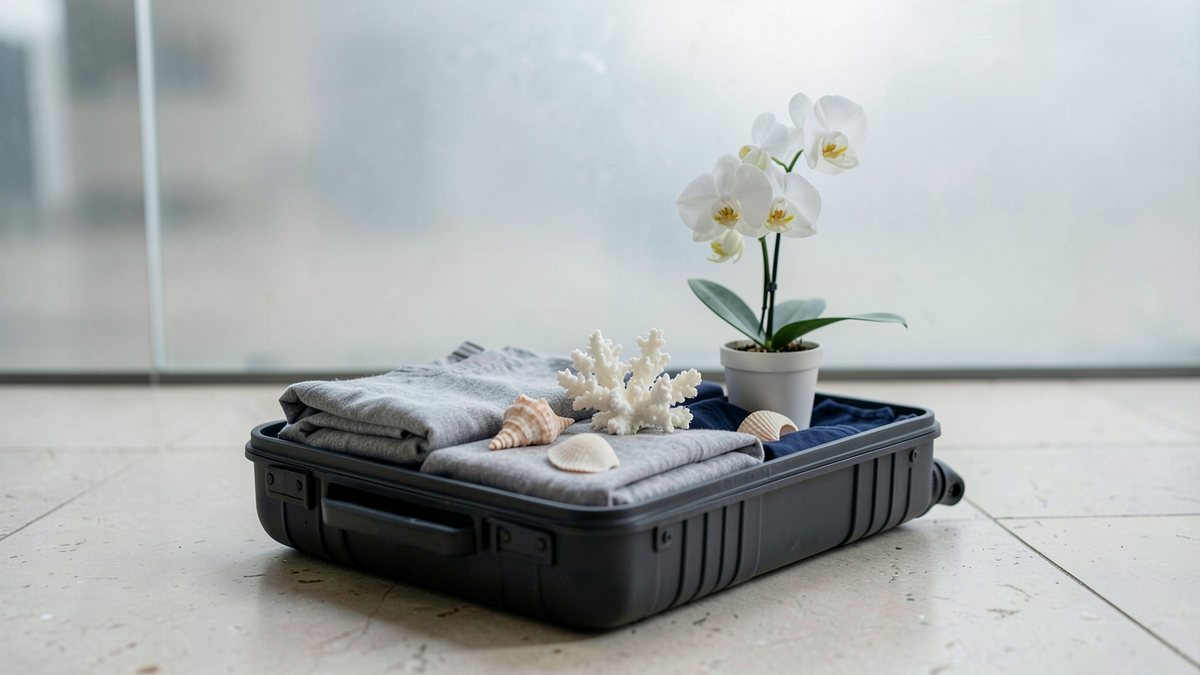
If a piece of coral, an ivory carving, a shell, a live orchid or another animal or plant product of a protected species is found in your luggage at Istanbul Airport, Türkiye's regulation implementing the Convention on International Trade in Endangered Species of Wild Fauna and Flora (CITES) frames what happens first. Under its Article 36, a specimen found to have been obtained or traded contrary to the Regulation is seized. Under its Article 40, importing or exporting a listed specimen without a CITES document leads to the document's cancellation and, according to the nature of the offence, to the penalties in the Turkish Penal Code, the Anti-Smuggling Law and the Customs Law. Whether a criminal case follows depends on which provision the facts meet, which is assessed by the prosecutor and, if a case is opened, by the court.
This guide reads the CITES Regulation, the Anti-Smuggling Law (Law No. 5607), the Land Hunting Law (Law No. 4915), the Fisheries Law (Law No. 1380), the TCK and the CMK as they stand on 29 October 2026. It does not say whether any species is listed and is general information, not advice on a particular case.
1. What Is CITES, and Which Items Does Türkiye's Regulation Cover?
CITES is an international convention that controls cross-border trade in listed animal and plant species; it entered into force for Türkiye on 22 December 1996. Türkiye applies it through the Nesli Tehlike Altında Olan Yabani Hayvan ve Bitki Türlerinin Uluslararası Ticaretine İlişkin Sözleşmenin Uygulanmasına Dair Yönetmelik (the CITES Regulation), published in the Official Gazette on 27 December 2001 and amended in 2004 and 2019.
What a "specimen" is. Under Article 4 of the Regulation, a specimen is any living or dead animal or plant of a species covered by the Regulation, any readily recognisable part of it, or a derivative. "Trade" means import, export, transit, re-export and introduction from the sea.
The three lists. Under Article 5 of the Regulation, List I covers species threatened with extinction that are or may be affected by trade, and trade in their specimens may be permitted only in exceptional circumstances; List II covers species that may become threatened unless trade in their specimens is strictly regulated; and List III covers species that a party regulates within its own jurisdiction and for which it has asked other parties to cooperate. The lists are set by communiqués published by the Ministry of Trade's Directorate General of Imports after obtaining the favourable opinion of the Ministry of Agriculture and Forestry, so whether a particular coral, shell, orchid or carving is listed depends on the list in force at the time and on identifying the item.
The document. Articles 9 to 20 of the Regulation require a CITES document, in the cases they set out, for the export, import, re-export and introduction from the sea of a specimen on List I or II, and for the export and re-export of a List III specimen and its import from a country that has included the species in List III; under Article 38 the document is requested by the customs administrations during customs procedures. Under Article 24, the trade rules do not apply to the customs procedures for a specimen in transit through Türkiye, but customs officers ask for the exporting or re-exporting country's CITES document and the documents required under the transit regime of Customs Law No. 4458.
2. Can You Carry a Souvenir From a Protected Species as Personal Effects?
Sometimes. Article 25 of the Regulation provides that the permit rules for listed species do not apply to dead specimens, parts and derivatives that count as personal or household effects, but it lists two cases that the exemption does not cover.
What counts as personal effects. Under Article 4, a specimen counted as personal or household effects is a dead specimen, part or derivative of a listed species that will not be used for commercial purposes and forms, or is intended to form, part of the belongings of a private individual. The definition speaks of dead specimens; a live plant or animal is not within it.
The two cases outside the exemption. Under Article 25:
- List I: the exemption does not apply where the owner acquired the specimen outside their country of residence and is taking it to that country.
- List II: where a live specimen is concerned and the owner took it from the wild in a country other than their country of residence, or is taking it to their country of residence, or both, a CITES document must be obtained, before export, from the management authority of the country from whose natural environment the specimen was taken.
Other routes in the Regulation. Under Article 28, where it is established that a specimen was acquired before Türkiye became a party to the Convention, or before the species was listed, and the management authority issues a document confirming this, the trade rules do not apply to that specimen. Under Article 23, where the exporting country's management authority has concluded that an animal was bred or a plant artificially propagated, its document replaces the CITES document, although a CITES document can still be issued if the authority considers it necessary.
Hunting trophies. Under Law No. 4915 Article 17, hunting tourists can take abroad, without another permit, the meat and parts of souvenir value of game they hunted and that is recorded in their approved temporary hunting documents, subject to Türkiye's commitments under international conventions.

3. What Happens When a Protected Specimen Is Found in Your Bag?
The specimen is seized. Under Article 36 of the Regulation, where customs or the relevant management authority finds that a specimen of a listed species was obtained or traded contrary to the Regulation, the specimen is seized and customs informs the management authority at once. Seized specimens go to the management authority after health checks.
The search. Under Law No. 5607 Article 9(2), in customs halls and at customs gates, the person, belongings, loads and vehicles of a person suspected of hiding contraband can be searched by customs officers for customs control, and contraband found is seized at once. Under Article 9(1), searches and seizures in containers and on persons are carried out under the Code of Criminal Procedure.
Costs and live specimens. The second paragraph of the Regulation's Article 36 provides that transport, storage and keeping costs, and the costs of protecting live animals and plants during the seizure, are recovered from those who acted contrary to the Regulation. Under its third paragraph, a live specimen is returned to its country if the costs are met by that country or paid by the person who acted contrary to the Regulation; for specimens that cannot be sent back, the Ministry identifies a suitable rescue centre, as defined in the Regulation's Article 35; separately, Law No. 4915 Article 4(3) provides rescue centres for wild animals seized under international conventions.
4. Can a Protected Specimen in Your Luggage Lead to a Criminal Case?
It can. Article 40 of the Regulation provides that, where a specimen is imported, exported, re-exported or introduced from the sea without a CITES document or with a false or invalid one, or where a false statement is made to obtain the document or the document is altered, the CITES document is cancelled and, according to the nature of the offence, the penalties in the relevant articles of the Turkish Penal Code, the Anti-Smuggling Law and the Customs Law apply.
What the Anti-Smuggling Law says. Law No. 5607 does not define "prohibited goods" or name CITES. Its relevant paragraphs:
- Article 3(1): bringing goods into the country without submitting them to customs procedures: imprisonment of one to five years and a judicial fine of up to ten thousand days.
- Article 3(7): bringing in goods whose import is prohibited by law, unless the act constitutes an offence with a heavier penalty: imprisonment of two to six years and a judicial fine of up to twenty thousand days, the same for knowingly buying, selling, carrying or keeping such goods.
- Article 3(8): taking out goods whose export is prohibited by law, unless the act constitutes another offence with a heavier penalty: imprisonment of one to three years and a judicial fine of up to five thousand days.
- Article 6(4): where goods found on passengers, among their belongings or in their means of transport contrary to their declaration are commercial in nature, or their import or export is prohibited, Article 3 applies.
- Article 3(22) punishes an attempt as if completed, and Article 3(23) increases the penalties where the value of the goods is excessive and reduces them where it is slight or very slight.
- Law No. 5607 Article 4 sets aggravated forms, including where the offence is committed within an organisation or by three or more persons together, and, where the goods forming the subject of the offence are of a nature to threaten environmental or public health, a prison sentence of not less than ten years unless the act constitutes an offence requiring a heavier penalty.
Whether a specimen carried without a CITES document falls under any of these paragraphs is a legal characterisation for the prosecutor and the court; this guide does not draw it for any case.
Wild animals: Law No. 4915. Under Law No. 4915 Article 18(1), wild animals whose trade is prohibited by international conventions to which Türkiye is a party, alive or dead, and their meat, eggs, skin, fur, horn and similar parts and derivatives, cannot be sold, bought or transported, and cannot be imported or exported. Under Article 26, a person who does not comply with the rules set under Article 18(1) and (2) is given an administrative fine, in the amount in force at the time.
Aquatic species: Law No. 1380. Under Law No. 1380 Article 2, aquatic products are plants and animals found in the seas and inland waters, and their eggs, excluding animals within the Land Hunting Law. Under Article 25(3), taking aquatic products abroad, and bringing them into the country alive, requires permission (exceptions are set by regulation). Under Article 36(m), a person acting contrary to Article 25(3) is given an administrative fine, in the amount in force at the time, and the products and the means of production and transport are seized and their transfer to the State is decided; if the act is repeated within two years, the penalty is imprisonment of one to three years and a judicial fine of five thousand to ten thousand days, with confiscation.
5. The Main Provisions Side by Side
The table compares the texts; it does not say which provision applies to a given item.
| Point | Law 5607 Article 3(1) | Law 5607 Article 3(7) and (8) | Law 4915 Articles 18(1) and 26 | Law 1380 Articles 25(3) and 36(m) |
|---|---|---|---|---|
| What the text names | Bringing goods in without submitting them to customs procedures | (7) bringing in goods whose import is prohibited by law; (8) taking out goods whose export is prohibited by law | Wild animals whose trade is prohibited by international conventions, and their parts and derivatives | Taking aquatic products abroad, or bringing them in alive, without permission |
| Consequence in the text | One to five years' imprisonment and a judicial fine | (7) two to six years and a judicial fine; (8) one to three years and a judicial fine | Administrative fine | Administrative fine; on repetition within two years, one to three years' imprisonment and a judicial fine |
| Item | Law 5607 Article 13(1) applies the TCK confiscation rules | Law 5607 Article 13(1) applies the TCK confiscation rules | Not in these articles; see Regulation Article 36 | Seized, with transfer to the State decided |
| Payment route | Article 5(2): reduction on payment | Article 5(2) excludes paragraph (7) | Not in these articles | Not in these articles |
6. What Are Your Rights if You Are Held at the Airport?
You have the right to a lawyer, to an interpreter if you need one, and the legal right not to make a statement about the accusation, whatever the item is.
Custody. Under CMK Article 91(1), if the prosecutor does not release a person apprehended, custody can be ordered; it cannot exceed twenty-four hours from apprehension, excluding the time needed to bring the person to the nearest judge, which cannot exceed twelve hours. CMK Article 91(4)(f) lists the offences in Law No. 5607 Article 3 among those for which, limited to cases caught in the act, police chiefs designated by the administrative authorities can order custody of up to twenty-four hours (up to forty-eight hours during certain social disturbances and for collectively committed offences); a person not released is brought before a judge within forty-eight hours at the latest, or four days for collectively committed offences. Under CMK Article 91(5), the person, their lawyer, legal representative, spouse or a first- or second-degree blood relative can apply to the criminal judge of peace against the prosecutor's written order.
Consulate and family. Under CMK Article 95(2), if the person apprehended or held is a foreign national, their consulate is informed unless they object in writing, and under Article 147(1)(d), without prejudice to Article 95, a relative of their choice is informed of the apprehension immediately.
Before a statement. Under CMK Article 147(1), you must answer questions about your identity truthfully, the accusation is explained, you are told that you can choose a lawyer who can be present, and you are told that you have the legal right not to make a statement about the accusation. You can ask for concrete evidence to be collected to clear yourself of suspicion (Article 147(1)(f)).
The lawyer and the interpreter. Under CMK Article 149(3), the lawyer's right to meet the suspect, to be present during the statement and to give legal assistance cannot be prevented or restricted; under Article 154(1) the suspect can meet their lawyer at any time, without a power of attorney, where others cannot hear; and under Article 150(1) a suspect who says they are unable to choose a lawyer has one appointed on request. Under CMK Article 202(1) and (3), the essential points are translated for a suspect who does not know Turkish well enough to express themselves, through an interpreter appointed at that stage by the judge or the prosecutor.
7. What Happens to the Item, and Does Payment Change Anything?
The item can be confiscated, and payment under the Anti-Smuggling Law reduces a penalty rather than returning the goods. Under TCK Article 54(4), items whose production, possession, use, carriage, purchase or sale constitutes an offence are confiscated (müsadere edilir), and under Law No. 5607 Article 13(1) the confiscation rules of the TCK apply to offences under that Law.
Effective repentance, Law No. 5607 Article 5(2). Except for the offence in Article 3(7), a person who has committed an offence in Article 3 and pays the State Treasury twice the customs value of the goods has the penalty reduced by half if payment is made before the investigation ends, or by one third if it is made before judgment at trial; the prosecutor or the judge informs the suspect or defendant of this. Under Article 5(3), this does not apply to repeat offenders or where the offence is committed within the activity of an organisation, and under Article 13(2), a decision not to impose a penalty, or to drop the case, because of effective repentance does not prevent the confiscation rules being applied to the goods.
8. Step by Step if a Specimen Is Found in Your Bag
- Answer questions about your identity truthfully; whether to say more about the item is your choice (CMK Article 147(1)(a) and (e)).
- Say that you want a lawyer and, if you need one, an interpreter (CMK Articles 147, 150 and 202).
- If you are a foreign national, decide whether your consulate should be informed; it is informed unless you object in writing (CMK Article 95(2)).
- Gather any receipt, CITES document issued abroad, or document under Article 23 or 28 of the Regulation.
- Ask for the seizure record and read any statement record before signing it (CMK Article 147(1)(i)).
See also our page on customs seizure at Istanbul Airport.
Frequently asked questions
Can I bring seashells home from a holiday in Türkiye?
It depends on the item. Under Article 4 of the CITES Regulation, a readily recognisable part of an animal of a listed species is a specimen, and the lists are set by communiqués in force at the time. Separately, under Law No. 1380 Article 25(3), taking aquatic products abroad requires permission, with the exceptions set by regulation.
Is a coral or ivory souvenir covered by the personal-effects exemption?
It can be. Under Article 25 of the Regulation, the permit rules do not apply to dead specimens, parts and derivatives counted as personal or household effects, which Article 4 defines as items not for commercial use that form part of a private individual's belongings. The exemption does not cover a List I specimen acquired outside the owner's country of residence and taken to that country, or the List II case set out in Article 25(b).
Can I take a live orchid or other plant through Istanbul Airport?
The personal-effects definition in Article 4 of the Regulation speaks of dead specimens, so a live plant of a listed species is not within it. Under Article 23, the exporting country's management authority's document stating that a plant was artificially propagated replaces the CITES document.
Is carrying a protected species without a CITES document a crime?
It can be. Article 40 of the Regulation refers, according to the nature of the offence, to the penalties in the Turkish Penal Code, the Anti-Smuggling Law and the Customs Law. Law No. 5607 Article 3 covers bringing goods in without customs procedures, bringing in goods whose import is prohibited by law, and taking out goods whose export is prohibited by law. Which provision, if any, fits a find is assessed by the prosecutor and the court.
Do I have to give a statement, and can I have a lawyer?
You must answer questions about your identity truthfully under CMK Article 147(1)(a), and under Article 147(1)(e) you are told that you have the legal right not to make a statement about the accusation. Under Article 149(3), the lawyer's right to be present during the statement cannot be prevented or restricted, and under Article 150(1) a lawyer is appointed on request if you say you cannot choose one.
Will I get the item back if I pay?
Not under the payment rule: Law No. 5607 Article 5(2) does not provide for the item's return. Law No. 5607 Article 5(2) reduces the penalty, by half before the investigation ends or by one third before judgment, where twice the customs value of the goods is paid to the State Treasury; it does not apply to the offence in Article 3(7), to repeat offenders or to offences within an organisation. Under Article 13(2), a decision not to impose a penalty, or to drop the case, because of effective repentance does not prevent the confiscation rules being applied to the goods, and under TCK Article 54(4) items whose carriage or possession constitutes an offence are confiscated.




This page is general information about Turkish law and procedure — not legal advice, and reading it does not create an attorney–client relationship. Laws and practice change and every case turns on its own facts, so please do not rely on it for your situation; speak with a lawyer first.
Related guides
All guides →Turkey Customs: What to Declare (Red vs Green Channel)
Turkey customs: which channel do you use at the airport, and what must you declare? A plain-English guide to the red vs green channel and declaration duty.
9 min readCustoms & CashCash Seized at Istanbul Airport Customs: Get It Back
Had cash seized at Istanbul Airport (IST) or Sabiha Gökçen customs? A plain-English guide to the declaration rules, the tutanak, and how to recover it.
7 min readCustomsGoods Seized at Istanbul Airport Customs: What to Do
Electronics, gifts, medication or goods held at Istanbul Airport customs? A plain-English guide to your rights, the process, and how to get your items back.
8 min readRelated service: Customs seizure — cash, goods & devices → · All airport legal services →
Speak with a lawyer
One message is all it takes. We answer 24 hours a day, every day of the year — for IST and Sabiha Gökçen.
Prefer to write? Send a written request — the form opens on Lexin Legal's website.