Cannabis, CBD Oil or THC Gummies in Your Luggage at Istanbul Airport
Cannabis, CBD oil or THC gummies in your bag at Istanbul Airport? How TCK 188 and 191 treat import and personal use, deferral, custody and your rights.
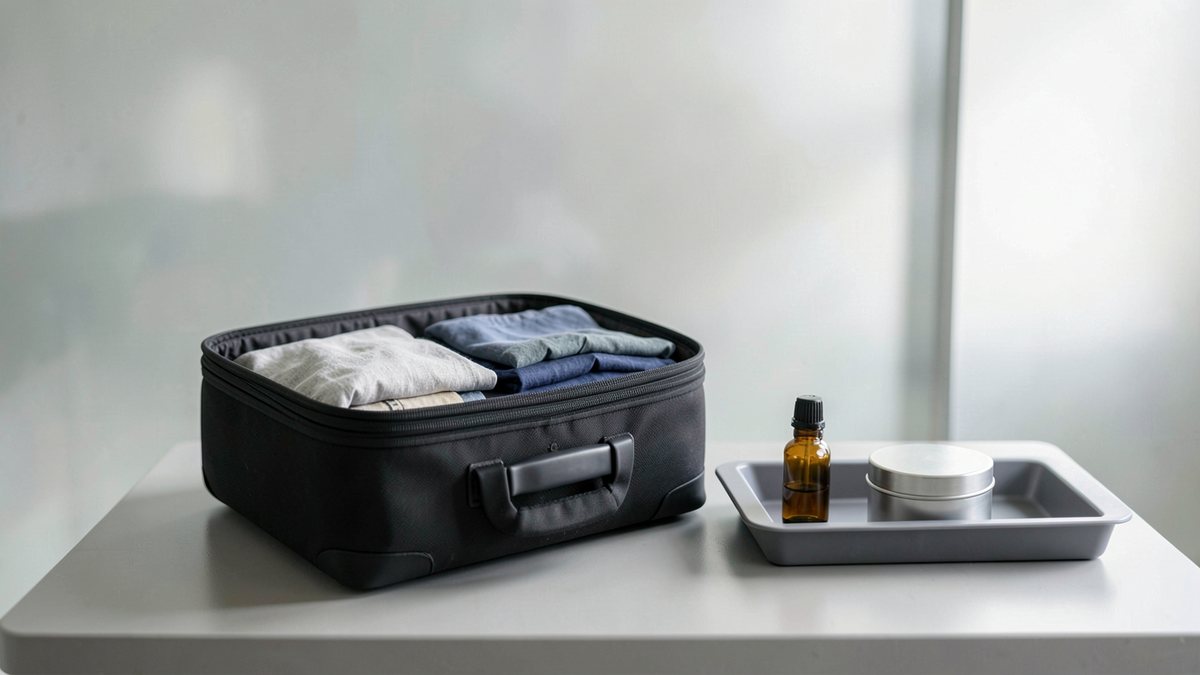
If cannabis, a CBD oil or THC gummies are found in your luggage at Istanbul Airport, two articles of the Turkish Penal Code (TCK, Law No. 5237) frame the case. TCK Article 188(1) punishes a person who imports or exports narcotic or stimulant substances without a licence or contrary to a licence with imprisonment of twenty to thirty years and a judicial fine of two thousand to twenty thousand days; TCK Article 191(1) punishes a person who buys, accepts or possesses them in order to use them, or who uses them, with imprisonment of two to five years, and under Article 191(2) the prosecution of that offence is deferred for five years at the investigation stage. Which article applies to a particular find, and whether the product contains a substance that the law treats as a narcotic or stimulant, is not decided at the airport: what the substance is, is established by expert examination, and the facts are assessed by the prosecutor and, if a case is opened, by the court.
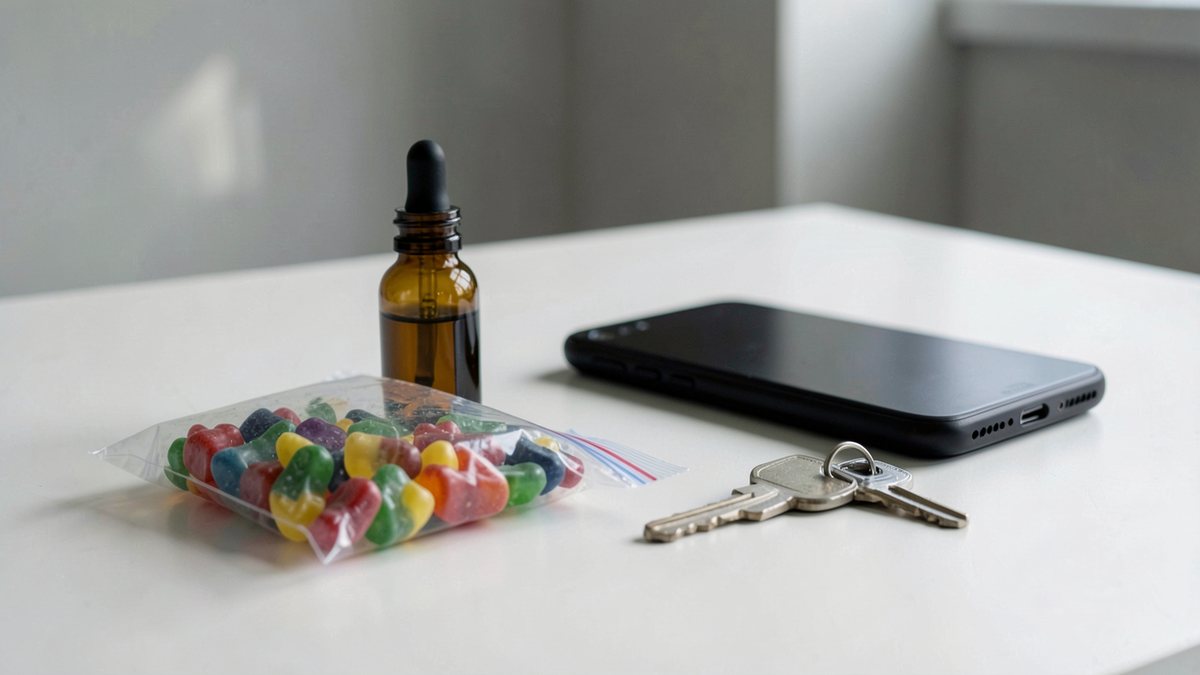
Products sold openly in other countries, such as a CBD tincture bought in a pharmacy abroad, a vape cartridge or a bag of gummies given as a gift, can end up in a carry-on bag without much thought. This guide reads the Turkish Penal Code and the Code of Criminal Procedure (CMK, Law No. 5271) as they stand today, including the amendments made to Articles 188 and 191 by Laws No. 6545 (2014), 6638 (2015) and 7445 (2023). It is general information, not advice on a particular case. It does not say whether CBD as such is lawful or unlawful in Türkiye: that depends on what the product contains, and the content of a seized product is established by expert examination, not by its label.
1. Is It a Crime to Carry Cannabis, CBD Oil or THC Gummies Through Istanbul Airport?
It can be. If the product contains a substance that falls within the narcotic or stimulant category, carrying it into or out of Türkiye can be examined as import or export under TCK Article 188(1), and holding it for one's own use can be examined under TCK Article 191(1). The law does not name brands or product types; it speaks of "narcotic or stimulant substances" (uyuşturucu veya uyarıcı madde).
What the text of Article 188(1) covers. The paragraph names three acts: manufacturing, importing and exporting (imal, ithal veya ihraç), each done without a licence or contrary to a licence (ruhsatsız veya ruhsata aykırı). Its wording contains no reference to personal use or to quantity.
What the text of Article 191(1) covers. The paragraph names buying, accepting or possessing narcotic or stimulant substances in order to use them (kullanmak için), and using them. Its title, as amended in 2014, refers to buying, accepting or possessing narcotic or stimulant substances in order to use them, or using them.
Who decides between them. The statute does not set a weight threshold or a list of circumstances that moves a case from one article to the other. How the act is classified is assessed by the prosecutor on the evidence in the file and, if a case is opened, by the court. This guide does not predict that classification for any situation.
Medicines and prescription products. Under TCK Article 188(6), the preceding paragraphs of Article 188 also apply to any substance whose production depends on the permission of the official authorities, or whose sale depends on a prescription issued by an authorised physician, and which produces a narcotic or stimulant effect; in that case the penalty can be reduced by up to half. Whether a particular product falls within this paragraph is a question for the expert examination and the court.
2. What Does Article 188 Say About Importing or Exporting Narcotics?
Article 188 is titled "manufacture and trade of narcotic or stimulant substances". Its first paragraph covers import and export, its third paragraph covers acts within the country, and the later paragraphs increase or reduce the penalty.
Import and export: Article 188(1). A person who manufactures, imports or exports narcotic or stimulant substances without a licence or contrary to a licence is punished with imprisonment of twenty to thirty years and a judicial fine of two thousand to twenty thousand days. Law No. 6545 replaced the earlier "not less than ten years" with "twenty to thirty years" in 2014, and the lower limit of the judicial fine ("two thousand days") was inserted by Decree-Law No. 694, enacted unchanged by Law No. 7078.
Acts within the country: TCK Article 188(3). A person who, without a licence or contrary to a licence, sells, offers for sale, gives to others, dispatches, transports, stores, buys, accepts or possesses narcotic or stimulant substances within the country is punished with imprisonment of not less than ten years and a judicial fine of one thousand to twenty thousand days. Where the person given or sold the substance is a child, the prison sentence cannot be less than fifteen years.
Increase by substance or place: Article 188(4). The penalty is increased by half where (a) the substance referred to in the preceding paragraphs is heroin, cocaine, morphine, base morphine, synthetic cannabinoids and their derivatives, synthetic cathinones and their derivatives, synthetic opioids and their derivatives, or amphetamine and its derivatives (the list as amended by Law No. 7445, in force since 5 April 2023), or (b) the acts in the third paragraph are committed in public places within two hundred metres of the boundaries of buildings such as schools, dormitories, hospitals, barracks or places of worship.
Increase by number of people: Article 188(5). Where the offences are committed jointly by three or more persons, the penalty is increased by half; where committed within the activities of an organisation formed to commit offences, it is increased by one fold.
Offences abroad: Article 188(2). Where the export is treated as import in the other country and a sentence is executed there, the executed part is deducted from the sentence imposed in Türkiye for the export.
3. What Does Article 191 Say About Possession for Personal Use?
Article 191 punishes buying, accepting or possessing narcotic or stimulant substances in order to use them, and using them, with imprisonment of two to five years. What sets it apart is its built-in mechanism: in the investigation, the public prosecution is deferred for five years, with probation and, where necessary, treatment.
The offence: Article 191(1). A person who buys, accepts or possesses narcotic or stimulant substances in order to use them, or who uses them, is punished with imprisonment of two to five years. Under Article 191(10), the penalty is increased by half where these acts are committed in public places within two hundred metres of buildings such as schools, dormitories, hospitals, barracks or places of worship.
Deferral of the prosecution: Article 191(2). In an investigation started for this offence, a decision is given to defer the filing of the public prosecution for five years (kamu davasının açılmasının ertelenmesi), without the conditions in CMK Article 171 being required. The prosecutor warns the suspect of the consequences of not complying with the obligations or breaching the prohibitions during the deferral period, and since Law No. 7445 (2023) the deferral decision is also notified to the police units.
Probation and treatment: Article 191(3). During the deferral period, the suspect is placed under a probation measure (denetimli serbestlik) for at least one year. By the prosecutor's decision, on the proposal of the probation directorate or of the prosecutor's own motion, this can be extended by six-month periods for up to two more years. The person can be required to undergo treatment during the probation period where this is considered necessary, and the prosecutor orders the person's referral to the relevant institution at least twice a year to establish whether they have used narcotic or stimulant substances.
When the case is filed after all: Article 191(4) and (5). A public prosecution is filed if, during the deferral period, the person (a) persists in not complying with the obligations imposed or the requirements of the treatment, (b) again buys, accepts or possesses narcotic or stimulant substances in order to use them, or (c) uses narcotic or stimulant substances. Under Article 191(5), renewed acquisition, possession or use during the deferral period counts as a breach under the fourth paragraph and is not made the subject of a separate investigation and prosecution.
No second deferral: Article 191(6). Once a public prosecution has been filed under the fourth paragraph, no deferral decision under the second paragraph can be given in investigations opened on the allegation that the offence in the first paragraph was committed again.
The end of the deferral: Article 191(7). If the suspect does not act contrary to the obligations set out in the fourth paragraph and does not breach the prohibitions during the deferral period, a decision of non-prosecution (kovuşturmaya yer olmadığı kararı) is given.
When a trafficking or import case turns out to be personal use: Article 191(8). Where, in a prosecution for the offence in Article 188 or Article 190, it becomes clear that the offence falls exclusively within Article 191, a decision deferring the announcement of the verdict (hükmün açıklanmasının geri bırakılması) is given for the defendant within the framework of Article 191. Under Article 191(9), where Article 191 contains no different rule, the CMK provisions on deferral of the public prosecution and on deferral of the announcement of the verdict apply.
4. Article 188 or Article 191: How the Provisions Compare
The table sets the two articles side by side as the texts read today. It does not say which one applies to any particular find; that is assessed on the facts.
| Point | TCK Article 188(1) | TCK Article 188(3) | TCK Article 191(1) |
|---|---|---|---|
| Acts named | Manufacturing, importing, exporting without or contrary to a licence | Selling, offering, giving, dispatching, transporting, storing, buying, accepting, possessing within the country without or contrary to a licence | Buying, accepting or possessing in order to use; using |
| Prison term | Twenty to thirty years | Not less than ten years (fifteen if given or sold to a child) | Two to five years |
| Judicial fine | 2,000 to 20,000 days | 1,000 to 20,000 days | None in the text |
| Increase by half | Substance on the Article 188(4)(a) list | Article 188(4)(a) list; 200-metre places under 188(4)(b) | 200-metre places under 191(10) |
| Built-in deferral | No | No | Five-year deferral of the prosecution (191(2)) |
| Lawyer without a request (CMK 150(3)) | Yes: lower limit above five years | Yes: lower limit above five years | No: on request (CMK 150(1)), unless CMK 150(2) applies |
| Reconciliation (CMK 253) | Not on the list | Not on the list | Not on the list |
| Police-ordered custody when caught in the act (CMK 91(4)) | Listed (Article 188) | Listed (Article 188) | Not listed |
5. Who Decides What the Substance Is?
The label on a bottle or a packet does not settle the question. Whether a seized product contains a substance that the law treats as a narcotic or stimulant, and if so which one, is a matter for expert (bilirkişi) examination of the substance; the legal assessment then rests with the prosecutor and the court.
Why it matters for the penalty. The identity of the substance can affect which paragraph is engaged. Article 188(4)(a), for example, increases the penalty by half where the substance is one of those listed there, including synthetic cannabinoids and their derivatives. Article 188(6) concerns substances whose production depends on official permission or whose sale depends on a prescription. Neither question can be answered from the outside of a package.
The suspect's procedural rights around the expert report. Under CMK Article 67(5), once the expert examination is complete, the suspect and their lawyer are given time to request a new expert examination or to state their objections; if these requests are rejected, a reasoned decision is given within three days. Under CMK Article 67(6), the suspect or their lawyer can obtain a scientific opinion from their own specialist on the expert report.
What happens to the substance. Under TCK Article 54(4), items whose production, possession, use, transport, purchase or sale constitutes an offence are confiscated (müsadere).
6. Can Telling the Authorities Reduce or Remove the Penalty?
Article 192, titled "effective remorse" (etkin pişmanlık), contains four separate rules. Each is tied to timing: two require the person to act before the official authorities learn of the offence, one applies after the offences have come to the authorities' knowledge, and one requires an application for treatment before an investigation is started.
Personal-use acquisition reported before the authorities learn of it: Article 192(2). No penalty is imposed on a person who bought, accepted or possessed narcotic or stimulant substances in order to use them if, before the official authorities learn of it, they inform the competent authority from whom, where and when they obtained the substance and thereby facilitate the capture of the offenders or the seizure of the substance.
Participants in manufacture and trade: Article 192(1). No penalty is imposed on a person who participated in the offences of manufacture and trade if, before the official authorities learn of it, they inform the competent authority of the other accomplices and of the places where the substances are hidden or manufactured, provided the information leads to the capture of the accomplices or the seizure of the substance.
Help after the offence is known: Article 192(3). Where, after these offences have come to the authorities' knowledge, a person voluntarily serves and helps in bringing the offence to light and in the capture of the offender or other accomplices, the penalty to be imposed is reduced by one quarter to one half, depending on the nature of the help.
Asking for treatment: Article 192(4). No penalty is imposed on a person who uses narcotic or stimulant substances if they apply to the official authorities or to health institutions and ask to be treated before an investigation is started against them for buying, accepting or possessing for use. In that case, the article provides that the duty of public officials and health professionals to report the offence does not arise.
Whether any of these conditions is met in a given file, and how much any reduction is, is assessed by the prosecutor and the court.
7. What Are Your Rights If You Are Held at the Airport?
You have the right to be told what you are accused of, to have a lawyer, to remain silent, to an interpreter and, as a foreign national, to have your consulate informed unless you object in writing. Custody has statutory limits, and anyone held who is not released is brought before a criminal judge of peace.
Being told your rights. Under CMK Article 90(4), after taking the measures needed to prevent escape or harm, the police inform the person apprehended of their legal rights without delay. Under Article 90(5), the prosecutor is informed at once and the police act on the prosecutor's instructions.
Custody limits. Under CMK Article 91(1), custody cannot exceed twenty-four hours from the moment of apprehension, excluding the time needed to send the person to the nearest judge or court, which cannot exceed twelve hours. Under Article 91(2), custody requires that the measure be necessary for the investigation and that there be concrete evidence indicating suspicion that the person committed an offence. Under Article 91(3), for collectively committed offences, because of difficulty in collecting evidence or the large number of suspects, the prosecutor can order in writing that custody be extended by up to one day at a time, for up to three days.
The Article 188 exception for cases caught in the act. Under CMK Article 91(4), limited to cases caught in the act (suçüstü), for the offences listed there, which include manufacture and trade of narcotic or stimulant substances (TCK Article 188), police chiefs designated by the civil administration can order custody of up to twenty-four hours, or forty-eight hours during certain social events and for collectively committed offences; the person is brought before a judge within forty-eight hours at the latest, or four days for collectively committed offences. Article 191 is not on that list.
Challenging custody. Under CMK Article 91(5), the person, their lawyer, legal representative, spouse or a first or second-degree blood relative can apply to the criminal judge of peace against the prosecutor's written order on apprehension, custody or its extension; the judge decides on the papers without delay and in any event before twenty-four hours have passed. Under Article 91(7), a person in custody who is not released is brought before the criminal judge of peace and questioned at the latest at the end of these periods, with their lawyer present.
The statement. Under CMK Article 147(1), the person is told the offence they are accused of (b), told of their right to choose a lawyer and have the lawyer present (c), and told that they have the legal right not to make a statement about the accusation (e); they must answer questions about their identity truthfully (a). They can ask for concrete evidence to be collected to clear the suspicion (f). The statement is recorded in minutes, and if the person refuses to sign, the reasons are noted (i).
A lawyer. Under CMK Article 149(1), a suspect can have the help of one or more lawyers at every stage, and under Article 149(3) the lawyer's right to meet the suspect, to be present during the statement or questioning and to give legal assistance cannot be prevented or restricted. Under CMK Article 150(3), for offences whose lower limit is more than five years' imprisonment, a lawyer is appointed without a request; Article 188(1) and 188(3) meet that threshold. For Article 191, a suspect who says they are unable to choose a lawyer has one appointed on request under Article 150(1). Under CMK Article 154(2), for drug manufacture and trade offences committed within the activities of an organisation, the right of a suspect in custody to meet their lawyer can be restricted for twenty-four hours by a judge's decision at the prosecutor's request, and no statement can be taken during that time.
Interpreter and consulate. Under CMK Article 202(3), a suspect heard during the investigation who does not know Turkish well enough to explain themselves is given an interpreter appointed by the judge or the prosecutor, and under CMK Article 324(5) the interpreter's cost is borne by the State Treasury and is not counted as a trial cost. Under CMK Article 95(2), if the person apprehended or held is a foreign national, their consulate is informed unless they object in writing.
8. Can a Cannabis or CBD Case Be Settled Through Reconciliation?
No. Reconciliation (uzlaştırma) under CMK Article 253 is attempted for offences that depend on a complaint and for the offences listed in CMK Article 253(1)(b). TCK Articles 188 and 191 do not depend on a complaint and do not appear on that list, so the reconciliation procedure in Article 253 is not attempted for them.
Why the list matters. CMK Article 253(1)(b) names specific offences, such as intentional injury under TCK Article 86 (except its third paragraph) and theft under TCK Article 141. Under CMK Article 253(2), for offences in other laws, except those depending on a complaint, reconciliation requires an express provision in the law. CMK Article 253(1)(c) concerns children in the justice process, where the victim is a natural person or a private-law legal person and the offence carries an upper limit of not more than three years; Article 191(1) has an upper limit of five years.
For personal-use cases, the statute's own mechanism is the five-year deferral in Article 191(2) described in section 3.
9. Step by Step If Something Is Found in Your Bag
- Ask what you are accused of. Under CMK Article 147(1)(b), the accusation is explained to you.
- Ask for a lawyer and, if needed, an interpreter (CMK Articles 147(1)(c), 149(1) and 202(3)). Where the file concerns TCK Article 188(1) or 188(3), a lawyer is appointed without a request under CMK Article 150(3).
- Use your right not to make a statement if you need time (CMK Article 147(1)(e)).
- Do not guess about what the product contains. What the substance is, is established by expert examination; a statement about a label or a shop is not a laboratory result.
- Keep any documents you have for the product, such as a receipt or, for a medicine, a prescription. Article 188(6) concerns substances whose sale depends on a prescription, and the court assesses whether it applies.
- Read the record before signing. If you refuse to sign, the reasons are noted (CMK Article 147(1)(i)).
- Tell the police if you do not want your consulate informed. Under CMK Article 95(2), the consulate is informed unless you object in writing.
- After the expert report, ask your lawyer about objections. CMK Article 67(5) gives time to request a new examination or to object.
If you, or someone travelling with you, has been held at Istanbul Airport or at Sabiha Gökçen after a substance was found in luggage, a lawyer can explain these rules in your language and look at the records you were given. Guidance can start on WhatsApp. See also our pages on drug charges at the airport, police custody and giving a statement (ifade).
Frequently asked questions
Is CBD oil legal in Türkiye?
This guide does not answer that in the abstract, because the answer depends on what a given product contains. TCK Articles 188 and 191 speak of narcotic or stimulant substances, not of product names. Whether a seized oil, tincture or edible contains such a substance is established by expert examination, and the legal assessment rests with the prosecutor and, if a case is opened, the court. Under TCK Article 188(6), the rules of Article 188 also apply to substances that produce a narcotic or stimulant effect and whose production depends on official permission or whose sale depends on a prescription, with a possible reduction of up to half.
What is the penalty for bringing cannabis into Türkiye?
Under TCK Article 188(1), a person who imports or exports narcotic or stimulant substances without a licence or contrary to a licence is punished with imprisonment of twenty to thirty years and a judicial fine of two thousand to twenty thousand days. The penalty is increased under Article 188(4) and (5) in the cases listed there and can be reduced by up to half under Article 188(6). Whether a particular find is treated as import under Article 188(1) or as possession for personal use under Article 191(1) is assessed by the prosecutor and, if a case is opened, by the court.
What happens if it is treated as personal use under Article 191?
Article 191(1) provides for imprisonment of two to five years. Under Article 191(2), in the investigation the prosecution is deferred for five years without the conditions of CMK Article 171 being required. Under TCK Article 191(3), the suspect is placed under probation for at least one year, which can be extended by six-month periods for up to two more years, and can be required to undergo treatment where necessary. If the person complies during the deferral period, a decision of non-prosecution is given under Article 191(7); if they breach it in one of the ways listed in Article 191(4), a public prosecution is filed.
Can I be held at the airport, and for how long?
Under CMK Article 91(1), custody cannot exceed twenty-four hours from apprehension, excluding the time needed to bring the person to the nearest judge, which cannot exceed twelve hours. Under Article 91(3), for collectively committed offences, because of difficulty in collecting evidence or the large number of suspects, the prosecutor can extend it in writing by up to one day at a time, for up to three days. Under Article 91(4), for cases caught in the act involving TCK Article 188, police chiefs designated by the civil administration can order custody of up to twenty-four hours (forty-eight in the cases stated there), and the person is brought before a judge within forty-eight hours at the latest, or four days for collectively committed offences. Under Article 91(5), the person or their lawyer can apply to the criminal judge of peace against the prosecutor's written order.
Do I get a lawyer if I cannot choose one?
Under CMK Article 150(3), a lawyer is appointed without a request in investigations for offences whose lower limit is more than five years' imprisonment, which includes TCK Article 188(1) and 188(3). For Article 191, under Article 150(1) a suspect who says they are unable to choose a lawyer has one appointed on request. Under CMK Article 149(3), the lawyer's right to meet you, be present during the statement and give legal assistance cannot be prevented or restricted, subject to the twenty-four-hour restriction in Article 154(2) for organised drug manufacture and trade offences.
Can a drugs case be closed through reconciliation or by giving information?
Reconciliation under CMK Article 253 is not attempted for TCK Articles 188 and 191, because they do not depend on a complaint and are not on the CMK Article 253(1)(b) list. Under TCK Article 192(2), no penalty is imposed on a person who acquired a substance for their own use if, before the official authorities learn of it, they report from whom, where and when they obtained it and thereby facilitate the capture of the offenders or the seizure of the substance. Under Article 192(3), where a person voluntarily helps after the offences have come to the authorities' knowledge, the penalty is reduced by one quarter to one half depending on the nature of the help.
Will my consulate be told, and will I have an interpreter?
Under CMK Article 95(2), if the person apprehended or held is a foreign national, their consulate is informed unless they object in writing. Under CMK Article 202(3), a suspect heard during the investigation who does not know Turkish well enough to explain themselves is given an interpreter appointed by the judge or the prosecutor, and under CMK Article 324(5) that interpreter's cost is borne by the State Treasury and is not counted as a trial cost.




This page is general information about Turkish law and procedure — not legal advice, and reading it does not create an attorney–client relationship. Laws and practice change and every case turns on its own facts, so please do not rely on it for your situation; speak with a lawyer first.
Related guides
All guides →Stopped Over Drugs or Suspected Smuggling at Istanbul Airport
Stopped at Istanbul Airport because customs or police suspect drugs or smuggling (kaçakçılık)? What triggers it, what happens next, and your right to silence and a lawyer.
8 min readAirport & borderStopped Over Your Own Prescription Medication in Türkiye
Your medicine is legal at home but controlled in Türkiye. Why travellers are questioned over prescription drugs at the airport, what to carry, and what to do if you are stopped.
11 min readCriminal Law & Airport ArrestsSearched at Istanbul Airport
A traveller pulled aside at Istanbul Airport can be checked with a scanner and by hand at the terminal entrance without any court order, but a search that removes clothing, a search of the body's cavities or the taking of a urine or blood sample each rest on a different legal basis. This guide explains the preventive search power of Law No. 2559 Article 9, the pat-down and strip-search rules of the search regulation, the judicial search power in CMK Articles 116 to 119, the internal examination rules of CMK Articles 75 and 76, and how a drug finding turns into a TCK 188 or 191 file.
20 min readRelated service: Drug or smuggling charge at the airport → · All airport legal services →
Speak with a lawyer
One message is all it takes. We answer 24 hours a day, every day of the year — for IST and Sabiha Gökçen.
Prefer to write? Send a written request — the form opens on Lexin Legal's website.