Border Search of Mobile Phones and Laptops at Turkish Airports: Customs Powers vs CMK 134
A complete legal breakdown for international travellers stopped at Istanbul Airport (IST/SAW): understanding customs inspection boundaries, passcode demands, and the strict judicial warrant requirements under CMK Article 134.
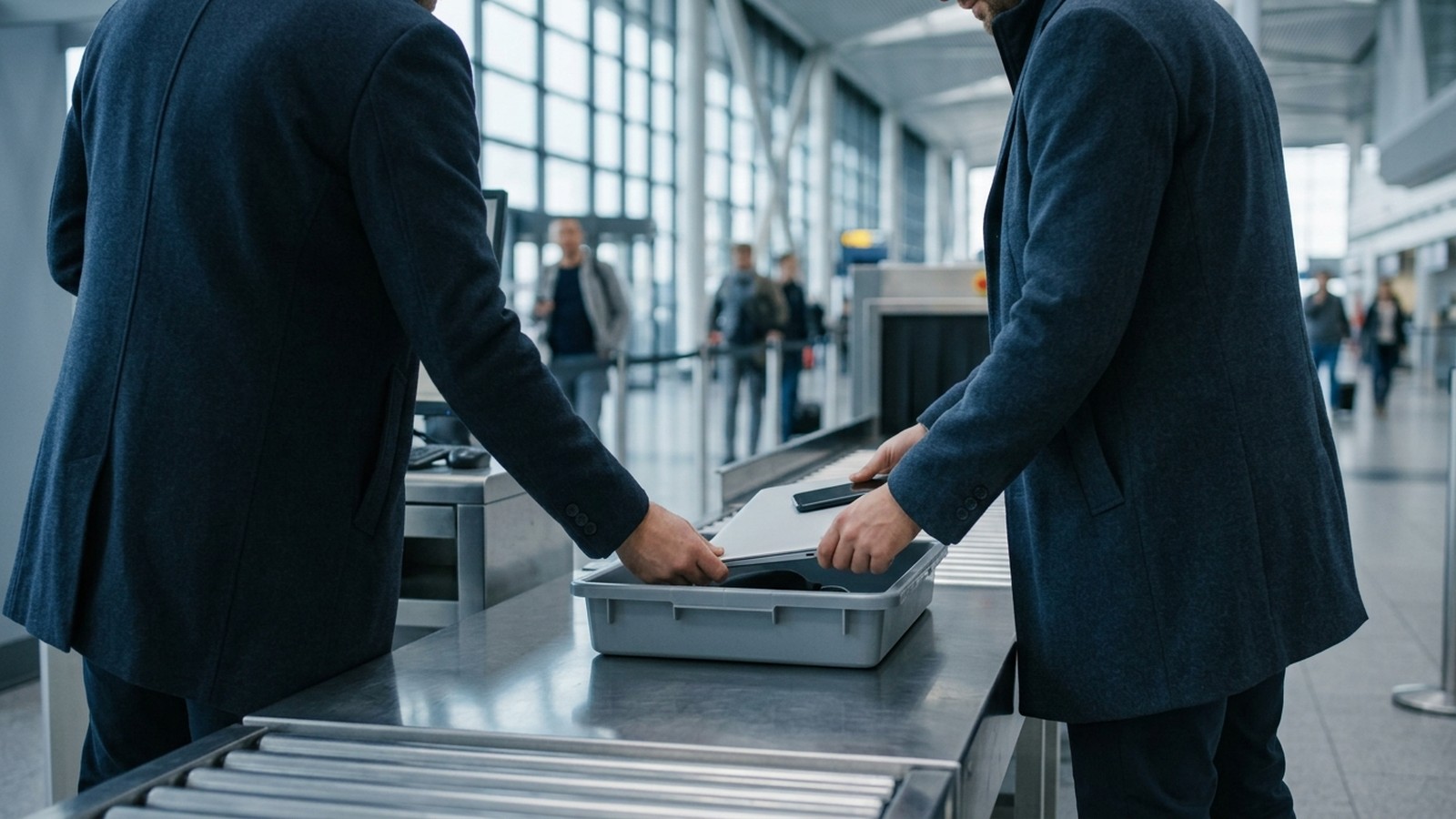
Standing in the customs inspection area at Istanbul Airport (IST) or Sabiha Gokcen Airport (SAW) while an officer points to your smartphone or laptop and asks you to unlock it is an intensely disorienting experience. For international travellers, business executives, and transit passengers, digital devices contain their entire personal and professional lives: private banking apps, privileged corporate communications, confidential client data, encrypted messages, personal photographs, and medical histories.
The immediate reaction is almost always uncertainty: Does a Turkish customs officer have the legal power to browse my private messages? Am I legally required to hand over my passcode or biometric unlock? What happens if I refuse?
Turkish law draws an uncompromising, statutory distinction between an administrative customs check of physical goods and a forensic digital search of personal data. While customs officers possess broad authority under Customs Law No. 4458 to inspect physical baggage and assess import duties, the contents of your digital devices are safeguarded by the Turkish Constitution and Article 134 of the Turkish Code of Criminal Procedure (CMK). Navigating this border interaction requires understanding where administrative customs authority stops and where criminal procedural protections begin.
For immediate legal representation if your devices have been detained or subjected to an unlawful border search, consult our dedicated practice on Search & Seizure (Arama ve El Koyma).
1. The Statutory Framework: Customs Law No. 4458 vs CMK Article 134
To understand your rights at the border, one must examine the two conflicting legal regimes that operate inside Turkish international transit hubs:
Administrative Customs Powers (Customs Law No. 4458 and Law No. 5607)
Under Customs Law No. 4458 and Anti-Smuggling Law No. 5607 (Kacakcilikla Mucadele Kanunu), customs enforcement officials (Gumruk Muhafaza) are empowered to inspect luggage, parcels, vehicles, and personal effects crossing the Turkish customs border. Their statutory mandate is economic and regulatory:
- Verifying that imported goods do not exceed personal duty-free allowances.
- Preventing the undeclared commercial importation of electronic hardware (such as multiple sealed iPhone boxes intended for commercial resale).
- Detecting physical contraband, prohibited narcotics, arms, or cultural artifacts concealed within physical device casings.
- Verifying device hardware identifiers (such as IMEI numbers or physical serial plates) to ensure compliance with Turkish Telecommunications Authority (BTK) registration regulations.
This administrative power is confined strictly to the physical object. A customs officer is lawfully entitled to weigh a laptop, inspect its battery compartment for hidden contraband, run a tablet through an X-ray scanner, or check whether a traveller is carrying six undeclared smartphones in their hand luggage.
Judicial Forensic Search Powers (CMK Article 134)
The moment an official attempts to bypass device security, demand a password, open encrypted messaging folders, or mirror a hard drive, the legal terrain shifts entirely from administrative customs control into criminal digital search and seizure.
Under Article 134 of the Turkish Code of Criminal Procedure (Law No. 5271), searching, copying, and seizing computers, computer programs, mobile phones, and digital storage media is an extraordinary judicial measure. It is subject to strict statutory prerequisites:
- Concrete Grounds of Suspicion: There must be concrete evidence establishing strong suspicion that a serious criminal offence has been committed.
- Subsidiarity: It must be demonstrated that evidence cannot be obtained through any other less intrusive investigative means.
- Prior Judicial Decision — with one exception you must know about: Article 134(1) requires strong grounds of suspicion based on concrete evidence and that there is no other way of obtaining the evidence. The decision is normally the judge's. But where delay would be prejudicial the public prosecutor may order it, and that order must be submitted for judicial approval within twenty-four hours; the judge rules within a further twenty-four hours. If the time expires or the judge refuses, the copies and decrypted texts must be destroyed immediately. So a prosecutor-ordered search is not automatically unlawful — what matters is whether the twenty-four-hour confirmation actually happened.
- Emergency Exception: In urgent cases where delay would frustrate the investigation, a public prosecutor may issue a written search order, but that order must be submitted to a competent judge within twenty-four hours for formal judicial confirmation.
Customs officers do not possess inherent statutory power to order or execute a CMK Article 134 digital search on their own initiative during a routine border check.
| Legal Dimension | Administrative Customs Check (Customs Law 4458) | Judicial Digital Search (CMK Art. 134) |
|---|---|---|
| Statutory Mandate | Tariff assessment, smuggling prevention, cargo security | Criminal investigation of specific statutory offences |
| Permissible Scope | External physical inspection, weight, IMEI, X-ray scanning | Unlocking screen, accessing emails, chats, cloud data, forensics |
| Authorising Authority | Shift supervisor or customs officer on duty | Criminal Peace Judge (or prosecutor subject to 24h review) |
| Evidentiary Threshold | Routine random sampling or customs risk profiles | Concrete evidence establishing strong criminal suspicion |
| Passenger Obligation | Must present physical baggage for scanning | No obligation to surrender passcodes without judicial order |
2. Can Customs Officers Demand Your Phone or Laptop Passcode?
This is the most critical question facing international passengers at Turkish borders. When a customs officer says "Unlock this device and open your WhatsApp," what is the legal position?
Under Article 20 of the Turkish Constitution, everyone has the right to demand respect for their private and family life, and personal privacy is inviolable. Under Article 22, the freedom and secrecy of communication is fundamentally protected. Furthermore, the universal nemo tenetur principle—enshrined in Article 38 of the Turkish Constitution and Article 147 of the CMK—guarantees that no person can be compelled to incriminate themselves or provide evidence against themselves.
Therefore:
- No Blanket Duty to Surrender Passcodes for Administrative Checks: A traveller who has not been formally declared a criminal suspect and presented with a judicial search warrant is under no statutory obligation under Customs Law No. 4458 to enter their PIN, password, or provide a biometric thumbprint to facilitate a browsing inspection of their private files.
- Refusal Does Not Equal Smuggling: Refusing an informal request to unlock a smartphone cannot lawfully be treated as an admission of guilt or proof of smuggling.
- The "Device Functionality" Excuse: Officers occasionally argue that they need the passenger to power on the device simply to prove it is a working electronic item rather than a hollowed-out container for contraband. In such instances, powering the device on to the lock screen fully satisfies the customs verification requirement without unlocking the user profile or browsing data.
If an officer insists on accessing digital contents, ask politely for the formal legal basis: "Are you conducting an administrative customs check of the hardware, or is there a judicial search decision issued under CMK Article 134?"

3. Physical Hardware Scrutiny vs Digital Forensic Searching
Understanding the precise boundary between lawful physical customs scrutiny and unlawful digital intrusion is vital when drafting an objection or defence.
What Customs Officers Are Permitted to Do
- Directing Devices Through X-Ray Scanners: Baggage and handheld electronics can be passed through dual-view X-ray or computed tomography (CT) scanners to detect internal anomalies, hidden cavities, or foreign materials.
- Surface Swabbing for Explosive or Narcotic Trace: Officers may swab keyboards, casing edges, and charger ports for chemical analysis.
- Checking Physical Identity: Verifying that serial numbers or IMEI barcodes match packaging or declared ATA Carnet documentation.
- Verifying Commercial Quantities: If a passenger carries three laptops or ten smartphones in retail packaging, customs can detain the surplus goods for formal commercial declaration and duty assessment under customs tariff schedules.
What Customs Officers Are NOT Permitted to Do Without a Judge's Order
- Browsing Personal Photo Galleries: Scrolling through private photos or videos under the pretext of inspection.
- Reading Communication Records: Opening WhatsApp, Telegram, Signal, SMS threads, or email accounts.
- Examining Corporate Files: Opening financial spreadsheets, PDFs, corporate contracts, or client folders stored on a laptop drive.
- Cloud-Storage Access: Forcing a passenger to log into remote cloud drives (such as Google Drive, iCloud, or Dropbox). Extraterritorial digital searches of cloud servers located abroad without formal international judicial assistance (istinabe) violate international law.
- Physical Data Cloning (Mirror Imaging): Connecting forensic extraction hardware (such as Cellebrite or forensic imaging software) to download device data without a specific CMK 134 warrant.
4. The Critical Escalation: When Border Inquiries Become Criminal Investigations
How does a routine customs interaction transform into a criminal proceeding? The shift usually occurs rapidly in response to specific triggers:
- Discovery of Physical Contraband: If physical inspection reveals hidden commercial quantities of goods, undeclared foreign currency exceeding cash limits without source documentation, or prohibited items.
- System Flagging (GBT and Interpol Alerts): If border police passport control detects an active arrest warrant (yakalama karari) or a judicial restriction notice.
- Suspected Digital Contraband: Allegations concerning illicit digital media or cybercrime investigations.
The moment a passenger is suspected of a criminal offence under the Turkish Penal Code (Law No. 5237) or Anti-Smuggling Law No. 5607, the administrative process halts, and formal criminal procedure governs the interaction.
At this precise juncture:
- The passenger acquires the formal procedural status of a Suspect (Supheli).
- The public prosecutor on duty (Nobetci Cumhuriyet Savcisi) must be notified immediately.
- The rights under CMK Article 147 must be formally explained to the passenger in a language they understand.
- The passenger has the absolute statutory right to remain silent and to consult with a defense attorney before answering any questions or consenting to any search.
5. Passcode Demands Under CMK 134: Encryption and Unlocking Rules
If a criminal investigation is formally initiated and a public prosecutor or judge issues a CMK 134 digital search order, what happens if the device is password-protected or encrypted?
Article 134, Paragraph 2 of the CMK contains a specific statutory mechanism:
"If the computer, computer programs and computer logs cannot be accessed because they are password-protected, encrypted, or the lock cannot be broken, the computer and hardware may be seized to enable access through technical decryption."
Key legal realities governing encrypted devices:
- The Device May Be Seized for Lab Decryption: If the authorities possess a valid CMK 134 warrant and you decline to provide the password, they are legally entitled to seize the physical hardware and transmit it to the Cybercrime Department (Siber Suclarla Mucadele Sube Mudurlugu) for laboratory forensic analysis.
- Your copy of the backup — the right that actually exists: Article 134(3) requires that all data in the system be backed up during seizure, and Article 134(4) requires that a copy of that backup be given to the suspect or their counsel, with the fact recorded in a protocol and signed. The Code does not give a right to stand over the examination while it is imaged; it gives you a copy and a signed record. Ask for both by name.
- Immediate Copy Delivery (Imaj Teslimi): The authorities are statutorily required to provide the suspect or their attorney with an identical forensic duplicate (imaj) of the seized data upon request, free of charge, to guarantee evidentiary integrity.
- Hash Value Verification: Before any forensic extraction occurs, the original device and the clone must be hashed using cryptographic algorithms (MD5 or SHA-256). If the police fail to log the initial hash value, any digital evidence extracted subsequently can be excluded as tainted and legally inadmissible.
6. Procedural Protection: The Role of the Search & Seizure Protocol (Tutanak)
In any border dispute involving electronic devices, the official written record—known in Turkish procedure as the Tutanak—is the foundational piece of evidence. Never leave an airport inspection room without a complete, signed copy of this document.
When reviewing the search protocol:
- Demand an Interpreter: Turkish criminal procedure entitles you to an interpreter where you cannot express yourself adequately in Turkish — the test is whether you can make yourself understood, not whether you are fluent. Ask for one before you are asked to sign anything.
- Ensure Accurate Descriptive Inventory: Verify that the protocol lists the exact make, model, colour, serial number, and physical condition of your device (including any pre-existing scratches or cracks).
- Record Any Objections in Writing: If an officer accessed your device without showing a judicial warrant, or if your device was taken out of your sight into an unmonitored room, instruct your attorney to write an explicit objection on the face of the document: "The device was examined without a judicial warrant under CMK 134 and without passenger consent; all procedural objections are reserved."
- Never Sign Blank or Untranslated Sheets: Signing an untranslated Turkish protocol that contains pre-printed waiver language ("arama yapilmasina muvafakat ediyorum" - I consent to the search) severely undermines subsequent challenges before the criminal courts.
7. Immediate Step-by-Step Defense Guide If Stopped at the Airport
If you or a colleague are currently detained or questioned over your electronics at Istanbul Airport (IST) or Sabiha Gokcen Airport (SAW), execute the following measures:
- Remain Calm and Courteous: Hostility or physical resistance escalates administrative procedures into obstruction of public duty charges under TCK Article 265.
- Distinguish Hardware from Data: Readily cooperate with physical baggage scanning, X-ray inspection, and passport verification, but establish a polite boundary regarding digital contents: "I am pleased to cooperate with customs baggage screening, but my electronic devices contain confidential personal and business data protected by law."
- Ask for Judicial Authority: Ask directly: "Is there a search warrant issued by a Criminal Peace Judge under CMK Article 134 for the digital contents of this device?"
- Invoke Your Right to Legal Counsel: State immediately and clearly: "I wish to exercise my right to speak with an attorney before taking any further steps or signing documents."
- Contact an Airport Defense Lawyer: Our legal team operates 24/7 across Istanbul airports. An attorney can arrive at the customs enforcement precinct or border police station promptly to review the file, verify the existence of judicial warrants, prevent unlawful data harvesting, and safeguard your constitutional rights.
Frequently asked questions
Can Turkish customs officers browse my personal messages during routine baggage checks?
No. Customs enforcement officers operating under Customs Law No. 4458 have administrative authority to inspect physical luggage and verify that imported electronic hardware complies with customs and excise rules. However, reading private WhatsApp conversations, emails, or browsing histories constitutes a digital search under Article 134 of the Turkish Code of Criminal Procedure (CMK), which strictly requires concrete suspicion of a crime and an explicit search warrant issued by a judge.
Am I legally required to unlock my smartphone with my fingerprint or face ID at the border?
Under Turkish constitutional law (Articles 20 and 38) and criminal procedure, individuals are protected against self-incrimination and have a fundamental right to privacy. In routine administrative customs screening, there is no statutory obligation to provide biometric access or passcodes to allow officers to inspect private files. If an officer insists that you power on the device to confirm it is not a hollow smuggling container, turning the phone on to the lock screen satisfies that physical verification without surrendering access to private data.
What happens if I refuse to give my passcode when police present a CMK 134 warrant?
If law enforcement officers present a valid digital search warrant issued by a Criminal Peace Judge under CMK Article 134 and you decline to provide your passcode, officers are legally authorised under CMK 134(2) to seize the physical device and transfer it to the Cybercrime Department for technical forensic decryption. Article 134(2) also fixes the other side of that power: once the password has been broken and the necessary copies taken, the seized devices must be returned without delay. Put that sentence in your objection if the device is kept afterwards. However, declining to provide a passcode remains a non-violent exercise of procedural defence rights and does not constitute a separate criminal offense.
Can customs seize my brand new laptop or smartphone for non-declaration?
Yes, but only under specific customs conditions. If an international traveller brings multiple new, factory-sealed electronic devices that exceed reasonable personal use allowances (generally one personal laptop and one personal mobile phone per passenger under Turkish customs import decrees), customs officials may determine that the goods are commercial cargo. In that scenario, the excess devices may be detained under Customs Law No. 4458 pending payment of customs duties, taxes, and potential administrative fines.
What should I do if an officer takes my phone into a private back room without me?
You should immediately state, politely but firmly, that you request the device remain in your presence or that a defense attorney be contacted before any inspection occurs. Taking a digital device out of the owner's line of sight creates significant evidentiary chain-of-custody violations. If the device is returned, demand that an official protocol (tutanak) be drafted recording the exact duration the device was out of your sight, and write an explicit note reserving your legal rights before signing.
How quickly can an airport lawyer intervene at Istanbul Airport or Sabiha Gokcen?
Our criminal defense and customs attorneys are based within close proximity to both Istanbul Airport (IST) and Sabiha Gokcen (SAW), providing 24/7 emergency response. Legal counsel can arrive at the airport customs enforcement branch or police station within short notice, verify whether a formal investigation file or warrant exists, advise you in private consultation before any statement, and object on the record to anything that falls outside what the decision actually authorises.
Related guides: Search & seizure (arama & el koyma) in Türkiye · Police took or searched my phone in Türkiye · Giving a statement (ifade) · Customs seizure at Istanbul Airport · Stopped at Istanbul Airport: the first hour · Criminal defence in Türkiye




This page is general information about Turkish law and procedure — not legal advice, and reading it does not create an attorney–client relationship. Laws and practice change and every case turns on its own facts, so please do not rely on it for your situation; speak with a lawyer first.
Related guides
All guides →Police Took or Searched My Phone in Türkiye: Your Rights
Can the police take your phone or search the data on it in Türkiye, and do you have to give your passcode? A plain-English guide to seizure (el koyma), device searches, and how to challenge an unlawful one.
9 min readAirport & borderStopped Over Your Own Prescription Medication in Türkiye
Your medicine is legal at home but controlled in Türkiye. Why travellers are questioned over prescription drugs at the airport, what to carry, and what to do if you are stopped.
11 min readCriminal Law & Airport ArrestsSearched at Istanbul Airport
A traveller pulled aside at Istanbul Airport can be checked with a scanner and by hand at the terminal entrance without any court order, but a search that removes clothing, a search of the body's cavities or the taking of a urine or blood sample each rest on a different legal basis. This guide explains the preventive search power of Law No. 2559 Article 9, the pat-down and strip-search rules of the search regulation, the judicial search power in CMK Articles 116 to 119, the internal examination rules of CMK Articles 75 and 76, and how a drug finding turns into a TCK 188 or 191 file.
20 min readRelated service: Search & Seizure (Arama & El Koyma) in Türkiye → · All airport legal services →
Speak with a lawyer
One message is all it takes. We answer 24 hours a day, every day of the year — for IST and Sabiha Gökçen.
Prefer to write? Send a written request — the form opens on Lexin Legal's website.